Jaipur (Rajasthani: Jayapura, जयपुर “The City of Jai”) is the capital and the largest city of the north-western Indian state of Rajasthan. Located 268 km (167 miles) from the national capital New Delhi, Jaipur is also known as the Pink City due to the dominant color scheme of its buildings in the old city.
Jaipur was founded in 1727 by Sawai Jai Singh II, the Kachhwaha Rajput ruler of Amer, after whom the city is named. It is one of the earliest planned cities of modern India, designed by Vidyadhar Bhattacharya. During the British colonial period, the city served as the capital of Jaipur State. After Indian independence in 1947, Jaipur became the capital of the newly formed state of Rajasthan in 1949.
Jaipur is a popular tourist destination in India, forming a part of the Western Golden Triangle tourist circuit along with Delhi and Agra. The city serves as a gateway to other tourist destinations in Rajasthan, such as Jodhpur, Jaisalmer, Bikaner, Udaipur, Bundi, Kota, and Mount Abu; it has two World heritage sites, Amer Fort, Hawa Mahal and Jantar Mantar. On 6 July 2019, the city was placed on the World Heritage Cities list. It is also known as the Paris of India. Due to its beauty, C.V. Raman called it the “Island of Glory”.
Jaipur derives its name from Sawai Jai Singh II, the Kachhwaha ruler of Amer, who founded the city in 1727. In Sanskrit, variations of the word “pur” or “pura” are commonly used to refer to a city or town. So “Jaipur” essentially means “The City of Jai” or “Jai’s City”.
In this post, I’ll show the attractions below and explain their significance in city’s historical fabric that led them to be inscribed in UNESCO World Heritage List.
JAIPUR जयपुर “The City of Jai” The Pink City
-Hawa Mahal
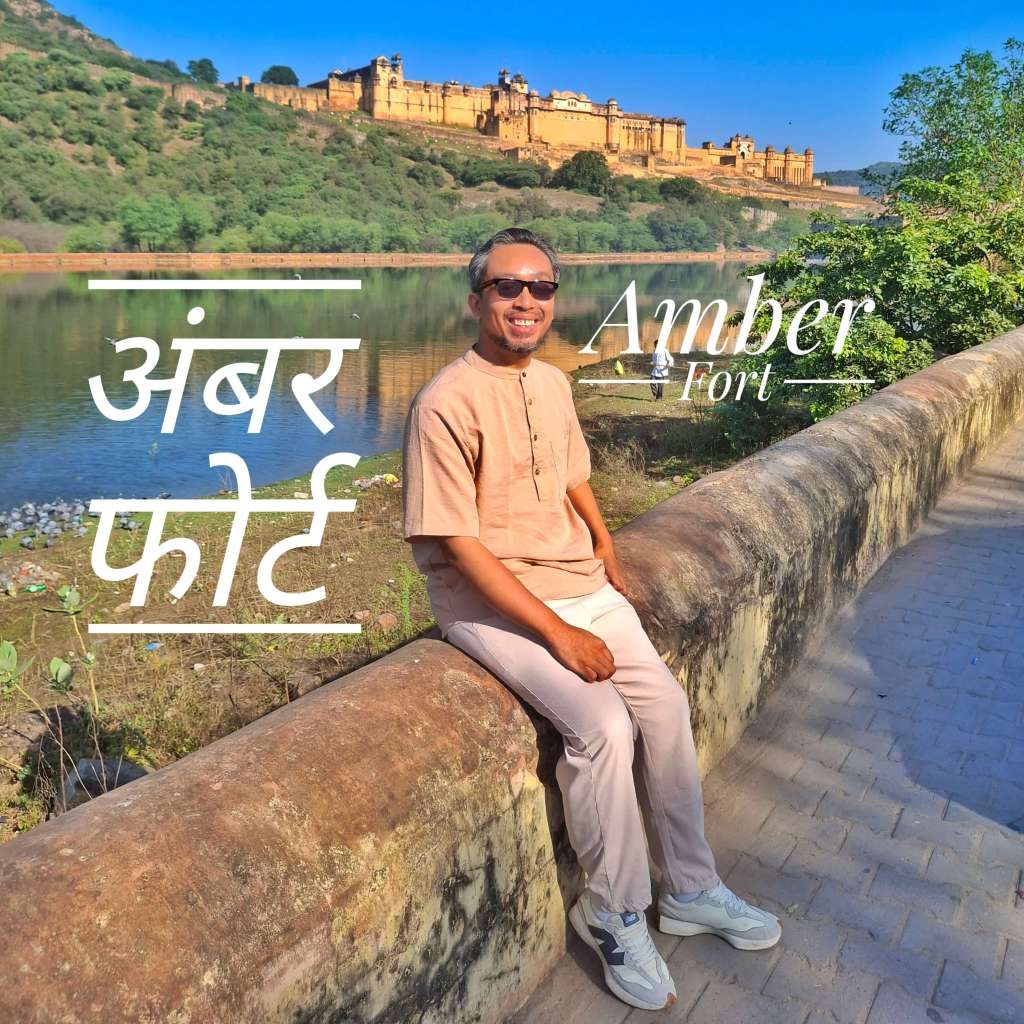
-Amber Fort INR500
-Jal Mahal
-Jantar Mantar INR200
-City Palace Gate
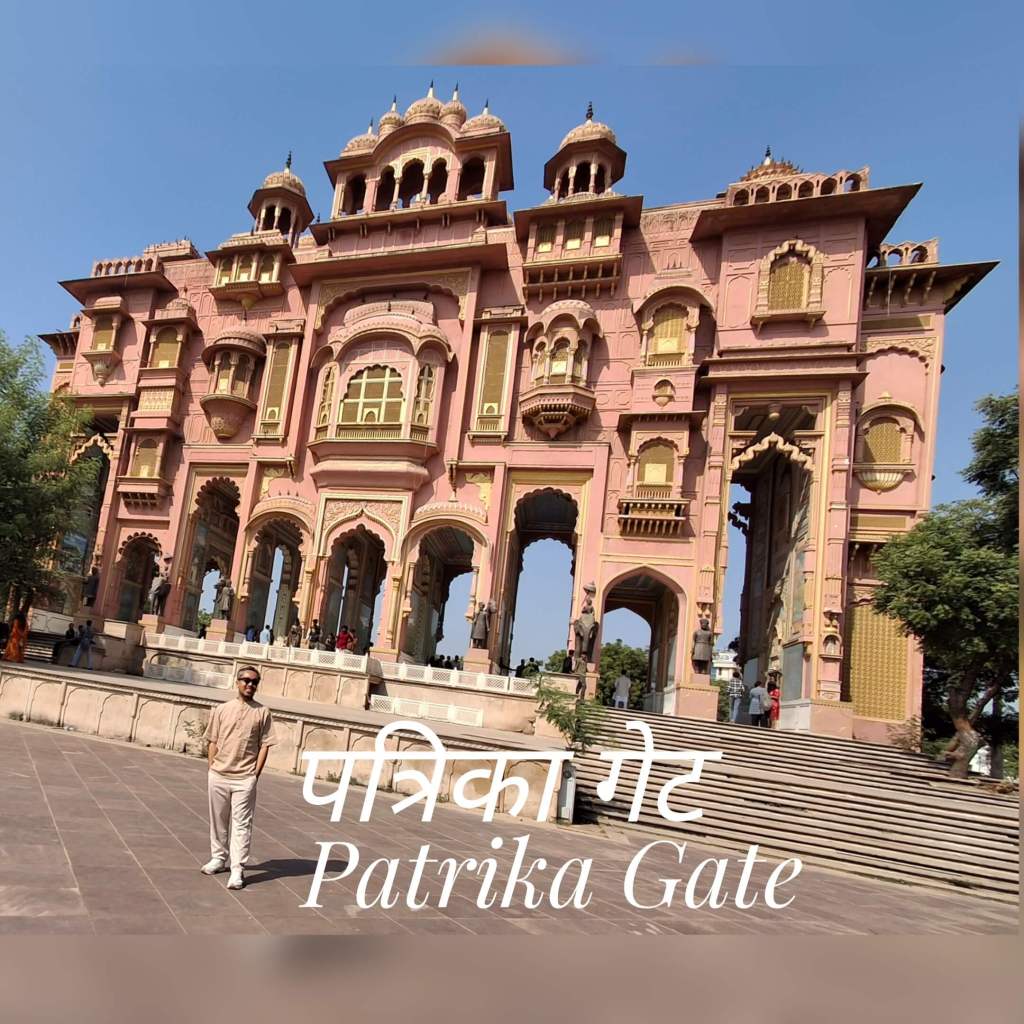
-Patrika Gate
-Tour at Jewelry Workshop
-Tour at Textile Printing Workshop
The Jaipur city wall, commonly known as the Parkota is the city wall encircling the old Jaipur city in Rajasthan state, India. It is a fortification that once safeguarded the planned city envisioned by Maharaja Sawai Jai Singh II in 1727. Ajmeri Gate: Positioned on the southern side, this gate faces towards Ajmer and was historically used for trade routes.
The Hawa Mahal is a palace in the city of Jaipur, Rajasthan, India. Built from red and pink sandstone, it is on the edge of the City Palace, Jaipur, and extends to the Zenana, or women’s chambers. Hawa Mahal, also known as the “palace of winds“ was built in 1799 by Maharaja Sawai Pratap Singh. It is considered unique as it has many small windows and balconies that seem like a honeycomb. The structure was built in 1799 by the Maharaja Sawai Pratap Singh, grandson of Maharaja Sawai Jai Singh, the founder of the city of Jaipur of Rajasthan. It was designed by Lal Chand Ustad. Its five-floor exterior is akin to a honeycomb with its 953 small windows called Jharokhas decorated with intricate latticework. The original intent of the lattice design was to allow royal ladies to observe everyday life and festivals celebrated in the street below without being seen.
Amer Fort or Amber Fort is a fort located in Amer, Rajasthan, India. Amer is a town with an area of 4 square kilometres (1.5 sq mi) located 11 kilometres (6.8 mi) from Jaipur, the capital of Rajasthan. Located high on a hill, it is the principal tourist attraction in Jaipur. Amer Fort is known for its artistic style elements. With its large ramparts and series of gates and cobbled paths, the fort overlooks Maota Lake, which is the main source of water for the Amer Palace.
Amer Palace is great example of Rajput architecture. Some of its buildings and work have influence of Mughal architecture. Constructed of red sandstone and marble, the attractive, opulent palace is laid out on four levels, each with a courtyard.
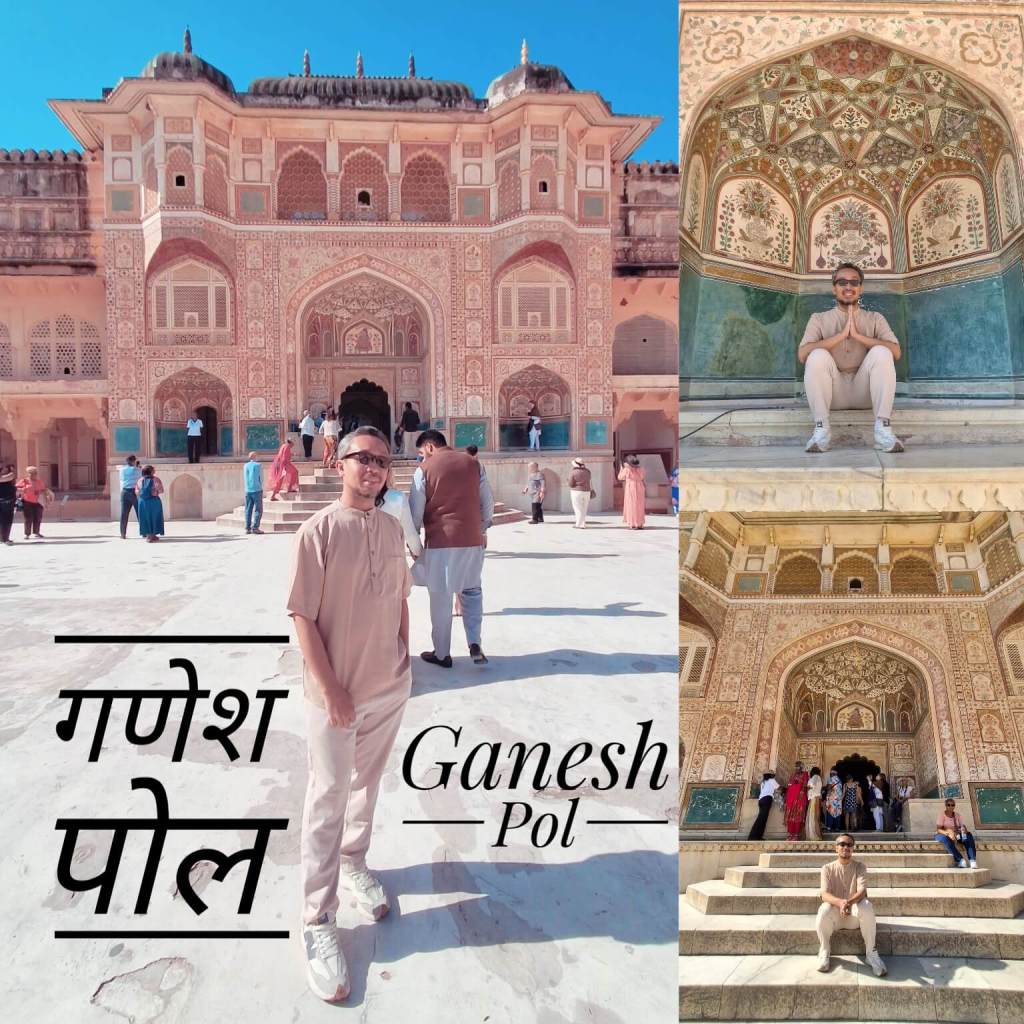
Ganesh Pol, or the Ganesh Gate, named after the Hindu deity Ganesha, believed to remove all obstacles in life, is the entry into the private palaces of the Maharajas. It is a three-level structure with many frescoes that were also built at the orders of the Mirza Raja Jai Singh (1621–1627). Above this gate is the Suhag Mandir where ladies of the royal family used to watch functions held in the Diwan-i-Aam through latticed marble windows called “jâlîs”.
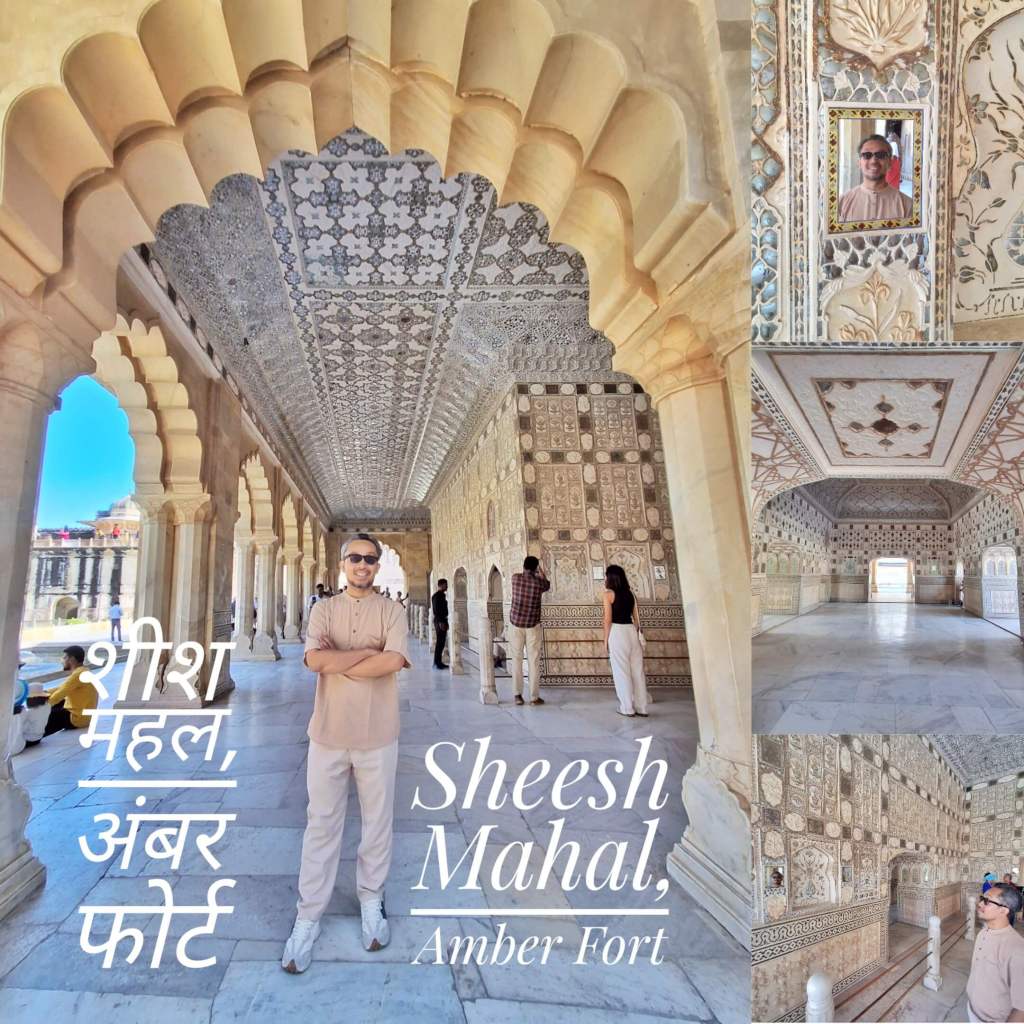
The building to the left of the entrance gate is called the Jai Mandir, which is exquisitely embellished with glass inlaid panels and multi-mirrored ceilings. The mirrors are of convex shape and designed with colored foil and paint which would glitter bright under candlelight at the time it was in use. Also known as Sheesh Mahal (mirror palace), the mirror mosaics and colored glasses were a “glittering jewel box in flickering candlelight”. Sheesh mahal was built by King Man Singh in the 16th century and completed in 1727. It is also the foundation year of Jaipur state. The walls around the hall hold carved marble relief panels. The hall provides enchanting vistas of the Maota Lake.
Jal Mahal (meaning “Water Palace”) is a palace in the middle of the Man Sagar Lake in Jaipur city, the capital of the state of Rajasthan, India. The palace was originally constructed around 1699; the building and the lake around it were later renovated and enlarged in the early 18th century by Maharaja Jai Singh II of Amber.
The Jantar Mantar is a collection of 19 astronomical instruments built by the Rajput king Sawai Jai Singh, the founder of Jaipur, Rajasthan. The monument was completed in 1734. It features the world’s largest stone sundial, and is a UNESCO World Heritage Site. It is near City Palace and Hawa Mahal. The instruments allow the observation of astronomical positions with the naked eye. The observatory is an example of the Ptolemaic positional astronomy which was shared by many civilizations.
The City Palace, Jaipur is a royal residence and former administrative headquarters of the rulers of the Jaipur State in Jaipur, Rajasthan. Construction started soon after the establishment of the city of Jaipur under the reign of Maharaja Sawai Jai Singh II, who moved his court to Jaipur from Amber, in 1727. Jaipur remained the capital of the kingdom until 1949—when it became the capital of the present-day Indian state of Rajasthan—with the City Palace functioning as the ceremonial and administrative seat of the Maharaja of Jaipur. The construction of the Palace was completed in 1732, and it was also the location of religious and cultural events, as well as a patron of arts, commerce, and industry.
Patrika Gate serves as the entrance to the Jawahar Circle Park and is one of the photographed spots in India. A massive gate famous for its gorgeous architecture, it is characterised by vibrant colours and intricate carvings that symbolise the Rajasthani culture.
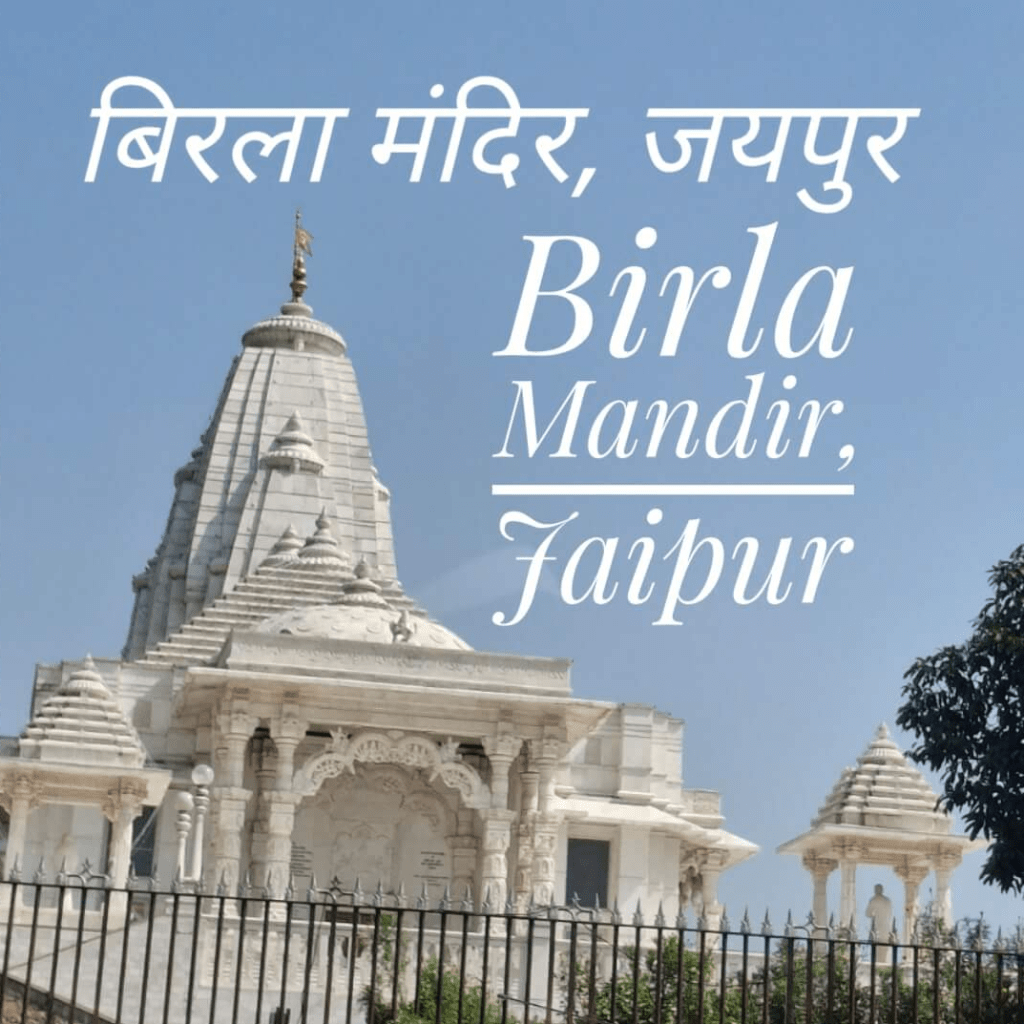
Birla Mandir (Lakshmi Narayan Temple) is a Hindu temple located in Jaipur, India, and is one of many Birla mandirs. It was built by the B.M. Birla Foundation in 1988 and is constructed solely of white marble. It is dedicated to the Hindu goddess Lakshmi and god Vishnu (Narayan), whose images appear inside, along with other Hindu gods and goddesses and selections from the Gita and Upanishads. It is located in Jaipur’s Tilak Nagar neighborhood, near Moti Dungari hill.
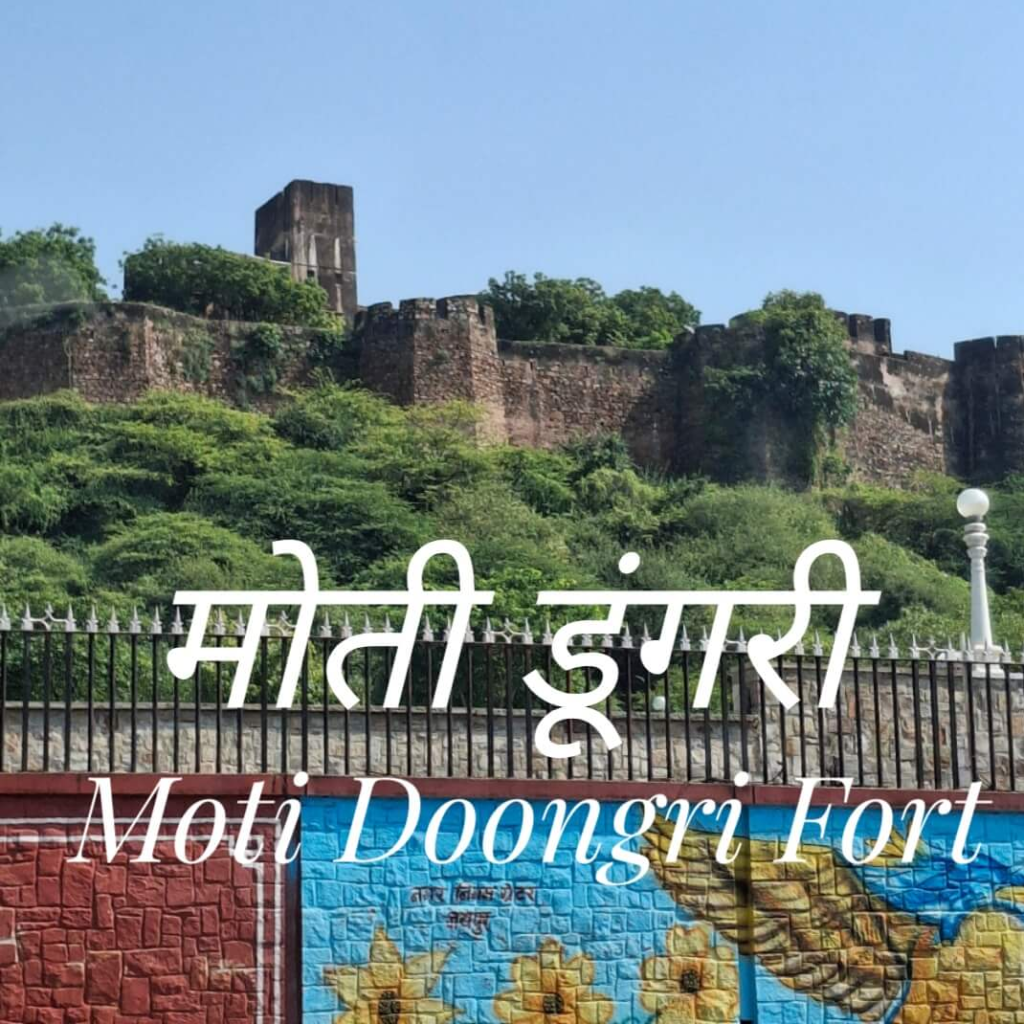
Moti Dungri is a Hindu temple complex dedicated to Lord Ganesha in Jaipur, Rajasthan. It was built in 1761 under supervision of Seth Jai Ram Paliwal. The temple is a popular tourist attraction in the city and is located next to the Birla Temple. The layout and structure of Moti Dungri is built in the Nagara style and is based on the model of Scottish castle. There are three entrance gates and few steps at the front. It was built using limestone and marble and construction work was completed in 4 months.
Jaipur Junction (Code: JP) is a railway station in Jaipur, the capital and largest city of the Indian state of Rajasthan. It serves as the headquarters of Jaipur railway division and North Western Railway zone of the Indian Railways.





 Ben Goes Where
1 thought on “INDIA: Arrival at Pink City of Jaipur”