Romblon: Weekend at the Marble Capital of the Philippines
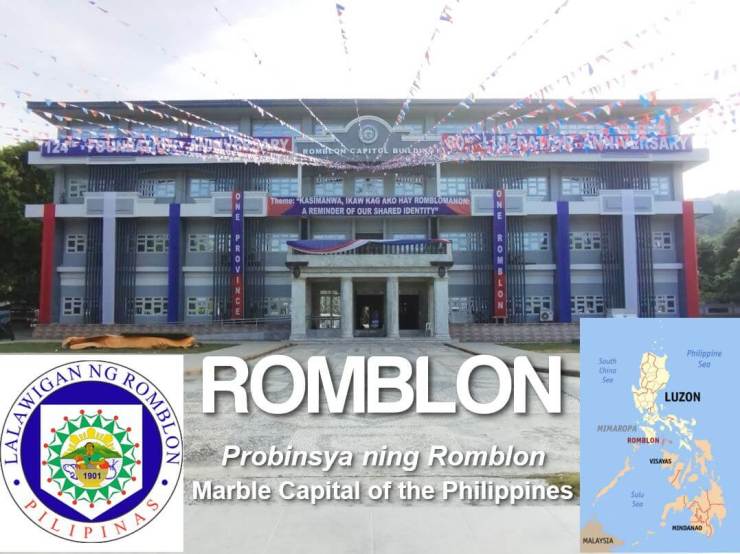
Romblon is one of the provinces off coast the island of Luzon. Since I visited almost all the contiguous provinces within mainland, I took the opportunity to spend my weekend here, despite long hours of travel via land by bus, and via sea by RORO (roll-on roll-off vessel), as this is the only way getting there unless you take a plane, which is expensive and has irregular schedule.
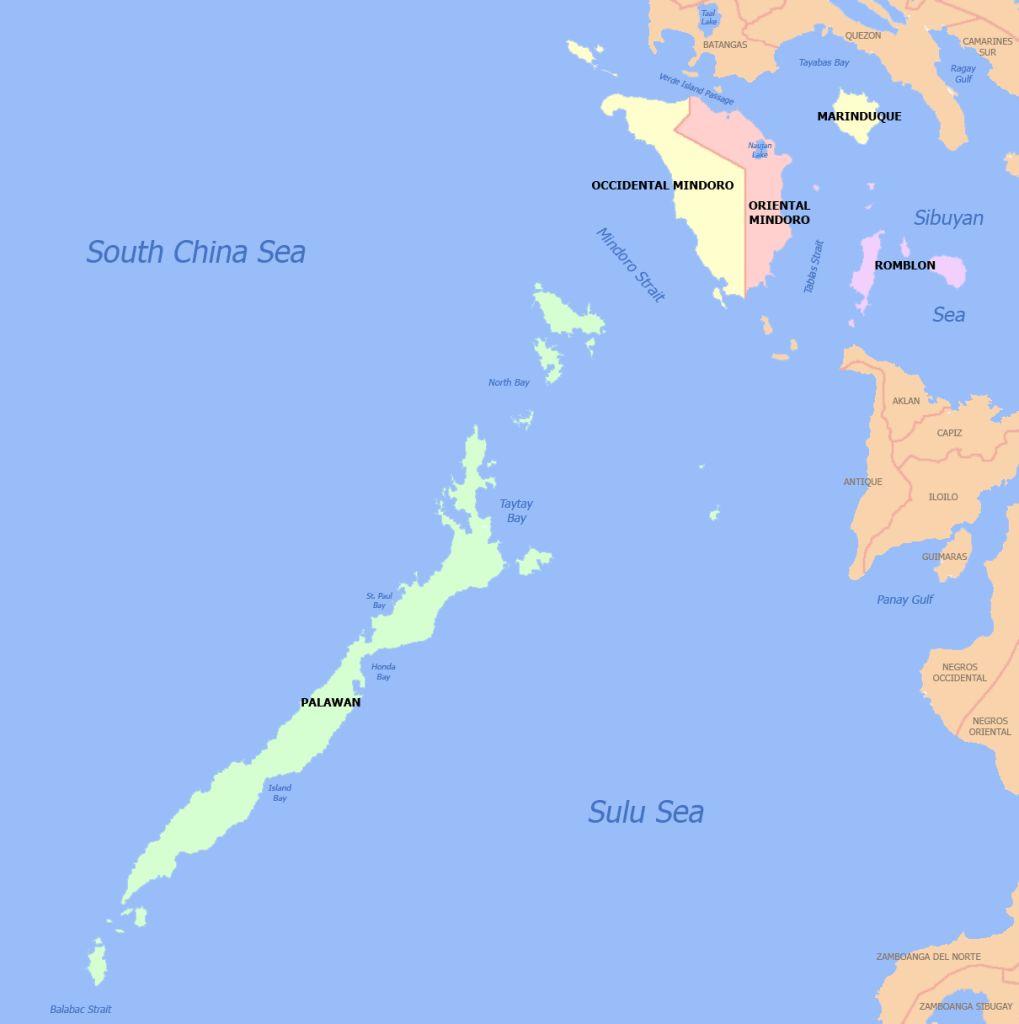
Mimaropa, formally known as the Southwestern Tagalog Region, is an administrative region in the Philippines. It was also formerly designated as Region IV-B until 2016. The name is an acronym combination of its constituent provinces: Mindoro (divided into Occidental Mindoro and Oriental Mindoro), Marinduque, Romblon and Palawan.
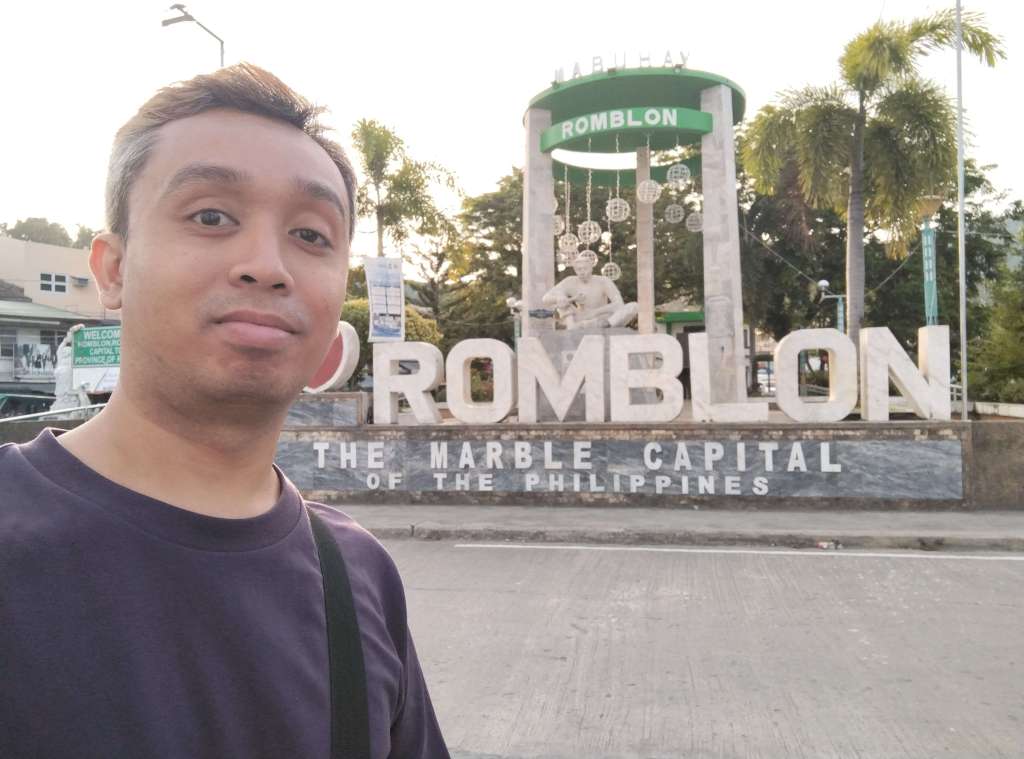
When you hear of Romblon, no doubt marble comes to mind. Marble is the most significant mineral deposit of Romblon and is the most renowned product of the province. Based on statistics, Romblon is the second biggest provincial marble producer of the country next to Bulacan. Romblon marble is of very high quality and comes in shades of white, green, pink, red and black. The Mines and Geosciences Bureau has estimated that Romblon is endowed with about 150 million metric tons of marble. At current rates of extraction, the supply may last for three more centuries. Tablas Island is also believed to have vast reserves of marble.
Marble quarrying and processing are major activities in Romblon. Among the most common marble products are categorized into the following: novelty items (gifts, ashtray, table bars), furniture (dining tables, baptismal fonts) and construction materials (tiles, balusters, marble chips).
Romblon, officially the Province of Romblon, is an archipelagic province of the Philippines located in the Mimaropa region. Its main components include Romblon, an archipelagic municipality of the same name that also serves as the provincial capital; Tablas, the largest island, covering nine municipalities (including Odiongan, the largest municipality in the province); Sibuyan with its three towns; as well as the smaller island municipalities of Corcuera, Banton, Concepcion, and San Jose. The province lies south of Marinduque and Quezon, east of Oriental Mindoro, north of Aklan and Capiz, and west of Masbate. Romblon is my 81st province (2nd to the last).
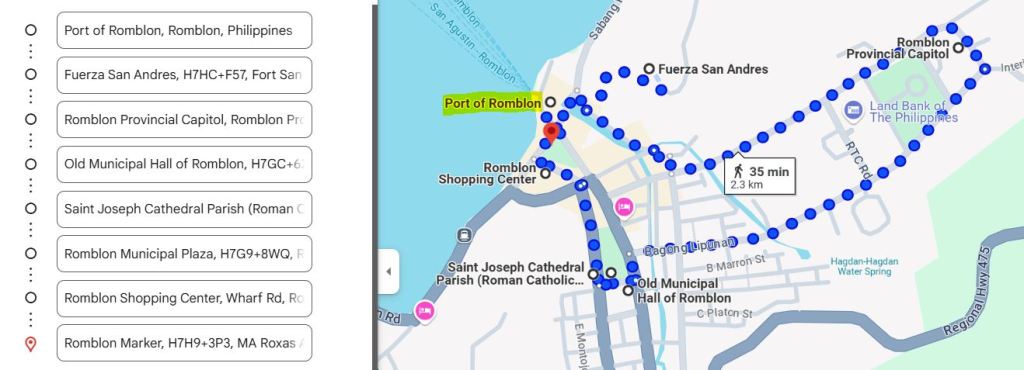
A quiet island town littered with national cultural treasures and natural scenic spots, in this post, I’ll show the tourist destinations I visited in Romblon, Romblon over the weekend, my 81st province. I’ll post here in my #project82 the articles related to each province. Presenting my sightseeing itinerary below with Romblon Port as my entry and exit point:
My Romblon Travel Map doing clockwise route from Romblon Port in Romblon, Romblon. Note that I stayed for a night at DRA Hotel within the town center. I arrived early morning at the port so I checked in about 3am and took a nap then went to first mass at Romblon cathedral. It’s nice to walk around at early morning, including the leisurely hike to Fuerza San Andres, to see the calm Romblon bay and the town center.
Romblon comprises 17 municipalities. Of these, nine are located in Tablas Island (San Agustin, Calatrava, San Andres, Odiongan, Ferrol, Santa Fe, Looc, Alcantara and Santa Maria), three in Sibuyan Island (Magdiwang, Cajidiocan and San Fernando) and five (Romblon, San Jose, Banton, Concepcion and Corcuera) are island municipalities.
The Port of Romblon serves the island of Romblon including the town of the same name.
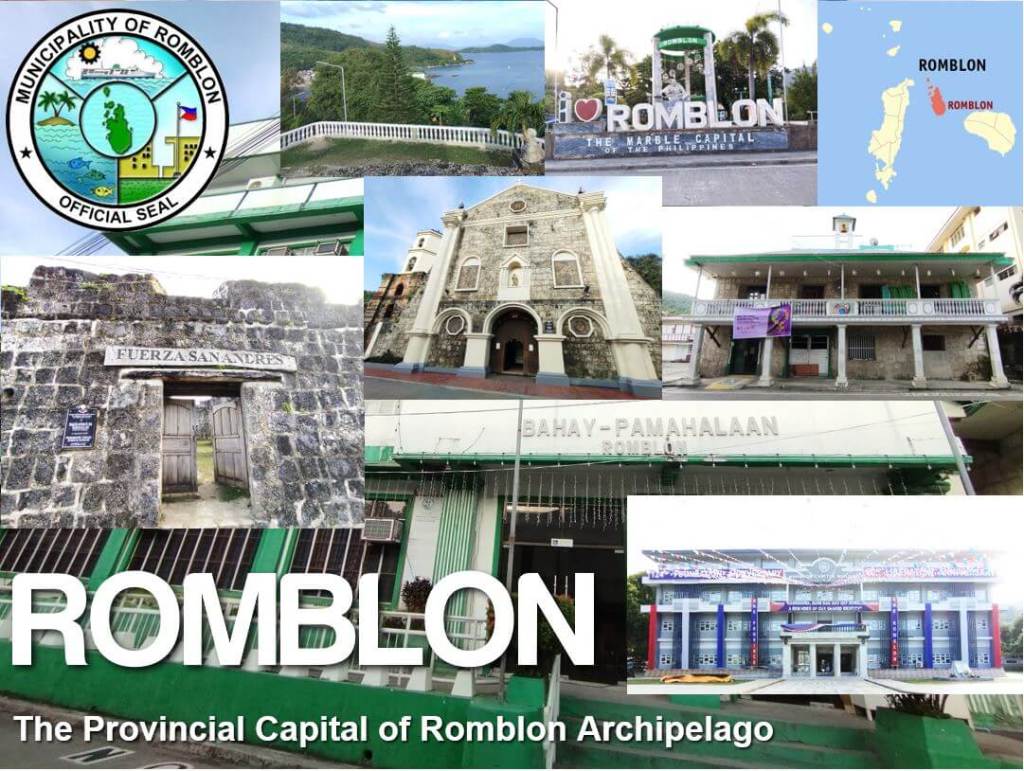
Romblon, officially the Municipality of Romblon, is a municipality and capital of the province of Romblon, Philippines. The archipelagic municipality is the capital of the province of Romblon and the seat of its provincial government. It includes Romblon Island as well as the nearby islands of Logbon, Alad and Cobrador.
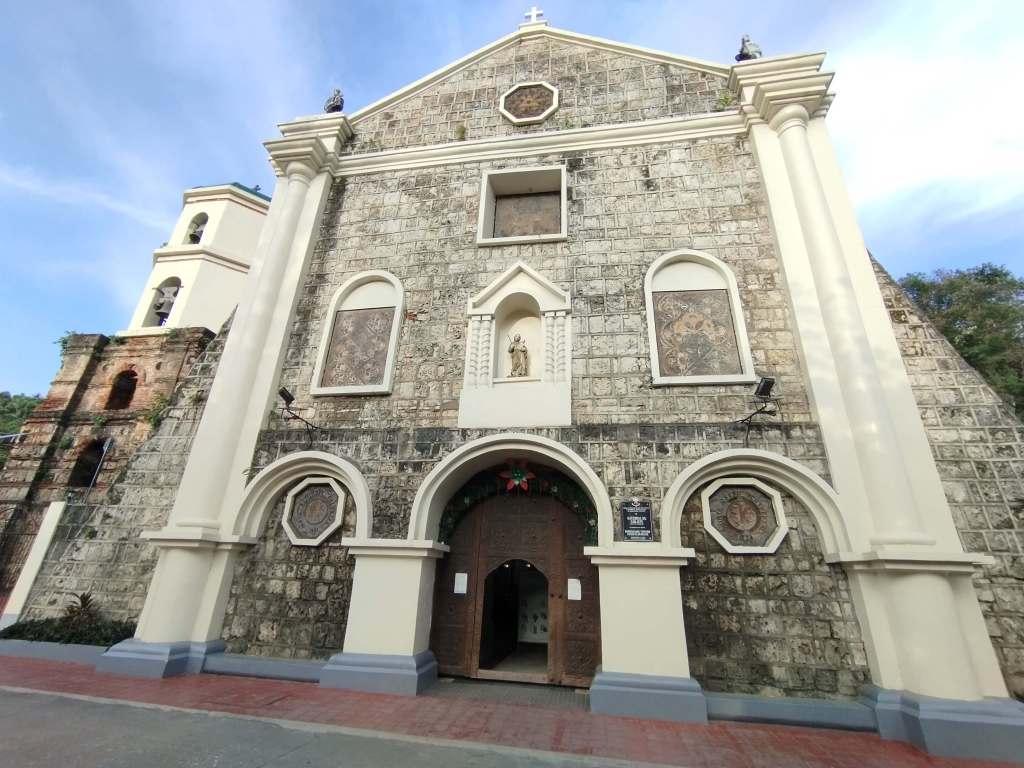
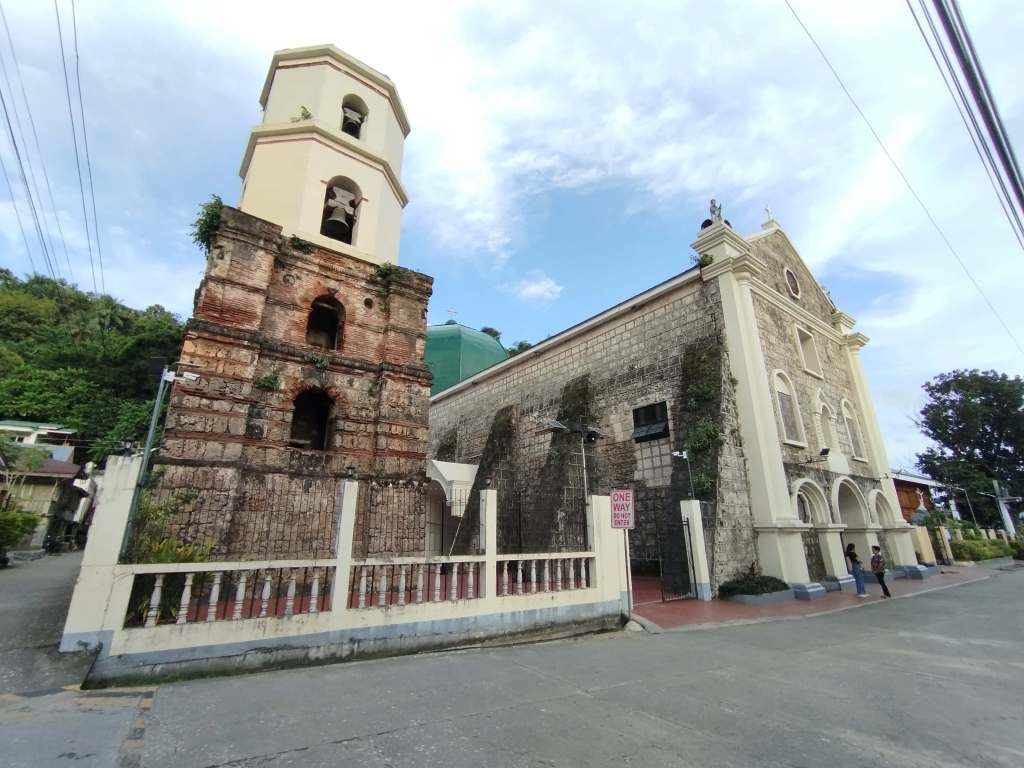
The Romblon Cathedral is Romblon’s central cathedral. The Roman Catholic Diocese of Romblon (Latin: Dioecesis Rombloniesis) is a diocese of the Catholic Church in the Philippines. A constituent of the sui iuris Latin Church, it is a suffragan of the Archdiocese of Capiz. Its titular patron is St. Joseph, spouse of the Blessed Virgin Mary, and its secondary patron is the Santo Niño. Erected in 1974, the diocese has experienced no jurisdictional changes in that time.
According to legend, the name “Romblon” was derived from the Romblomanon word Nagalumyom, which pertains to a chicken in the act of sitting on its eggs on a nest. This eventually evolved to Lomlom, and later on to Donblon, the name reported by Spanish chronicler Miguel de Loarca in his book Relacion de las Islas Filipinas in 1582, before finally evolving to Romblon.
Meanwhile, local historians Roland Madeja and Evelyn Reyes relate the origin of the name “Romblon” to the shape of Romblon Island. Madeja claims that the name was derived from the Spanish word ronblon, another term for tornillo, meaning “screw.” According to him, the Spanish claimed to have observed the screw-like shape of Romblon Island. Meanwhile, Reyes claims Romblon originated from “doubloon”, which refers to the Spanish coin used by Moro pirates in paying dowries for their brides-to-be. The Spanish might have named the island after the shape of the coin.
Beautiful Romblon Tourist Brochure given to me by staff at DRA Hotel.
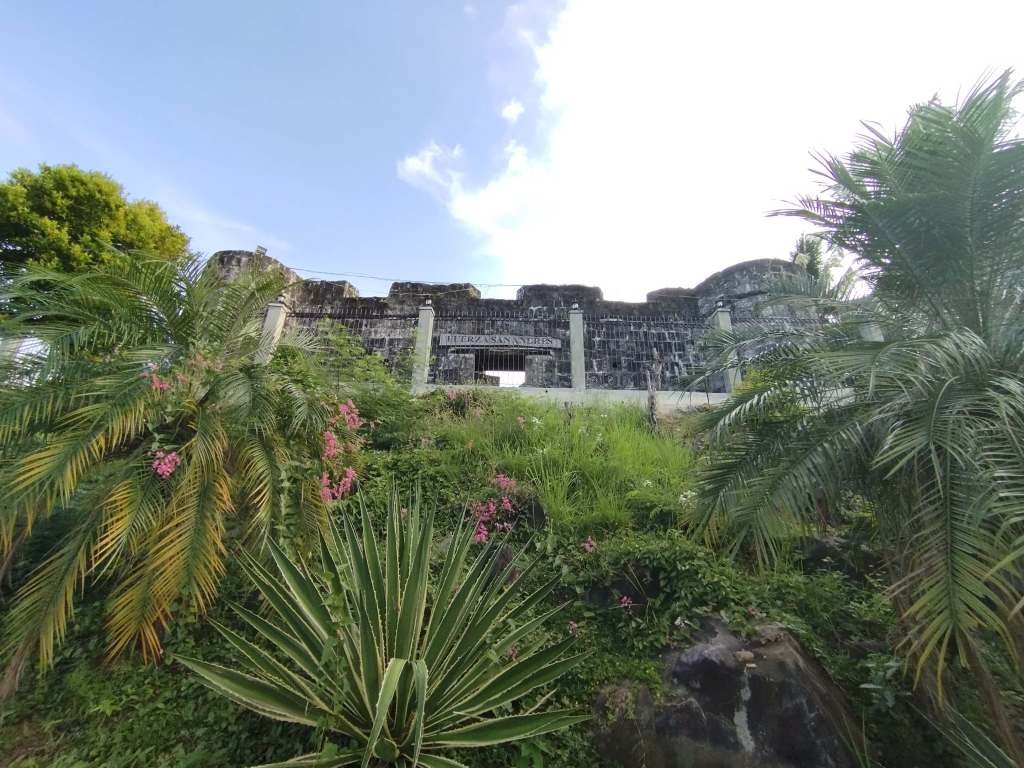
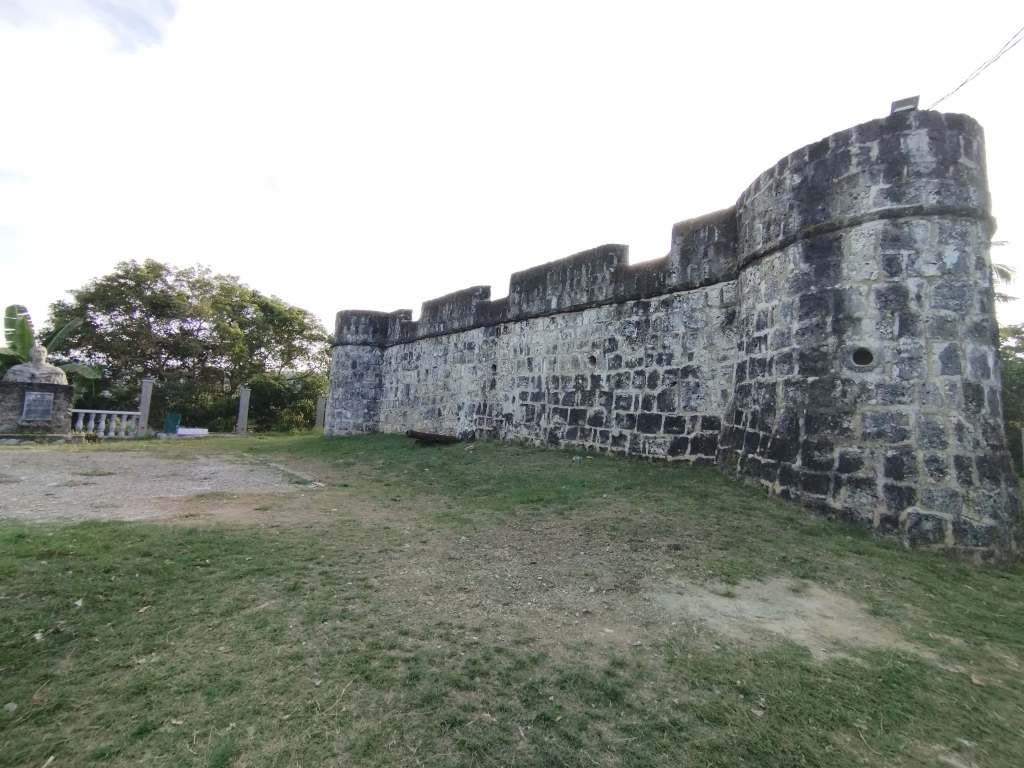
Twin Forts of Romblon: Twin Forts of Romblon ( Fuerza de San Antonio and Fuerza de Santiago) – Fuerza de San Andres and Fuerza de San Tiago are twin forts of coral blocks constructed on top of San Andres and Cavalry Hills respectively between 1573 and 1760, about 156 feet above sea level. With its strategic locations on top of hills, overlooking the whole town, these twin towers served as a stronghold during the Spanish Colonial Period to protect the people of Romblon against invaders and pirates. These fortresses also endured the wars fought in Romblon during the Philippine-American War and the Second World War. Fuerza de San Andres is an irregular quadrilateral foritification with circular buttresses that served like quasi-bastions built on top of a Hill. Its fort walls are low and stout, and inside are four stout pillars that presently support a reinforced cement beam for a degraded wooden platform built as a viewing deck. Declared as a National Cultural Treasure by virtue of National Museum Declaration No. 1-2013
Romblon Church: Cathedral of Saint Joseph of Romblon – The Cathedral of San Jose was built in the 18th-19th centuries by the Augustinian Recollects. This is the best preserved church complex in Romblon province, with several baroque-influenced retablos. There have been some recent alterations though. This is one of the oldest Roman Catholic Churches in the Philippines. It was constructed for the Recollect Fathers between 1640 and 1726 by talented local artisans using coral blocks and bricks. Declared as a National Cultural Treasure by virtue of National Museum Declaration No. 2-2001.Old Municipal Building: Built out of coral limestone during the Spanish colonial era, it housed the cuartel or headquarters of the local Guardia Civil. Retaining the old architecture of the building, the municipal hall is still used to house government offices and the municipal jail.
Fuente de Belen: Located across from the municipal hall, this water fountain was erected in 1864 by Eduardo Asuero as the source of fresh water for Romblon during the Spanish colonial period. Atop the fountain is an image of the Blessed Virgin Mary.
Romblon Harbor: It has offered shelter for sea vessels since Spanish colonial period. Lying off the bay is a sunken galleon and the wreck of a Japanese battleship.
The municipality consists primarily of Romblon Island, as well as the smaller Alad, Cobrador, and Logbon islands, to the northwest, each of which are their own barangays. The municipality proper is situated along the coast of Romblon Bay, a natural harbor and safe haven for ships passing in the area during inclement weather.
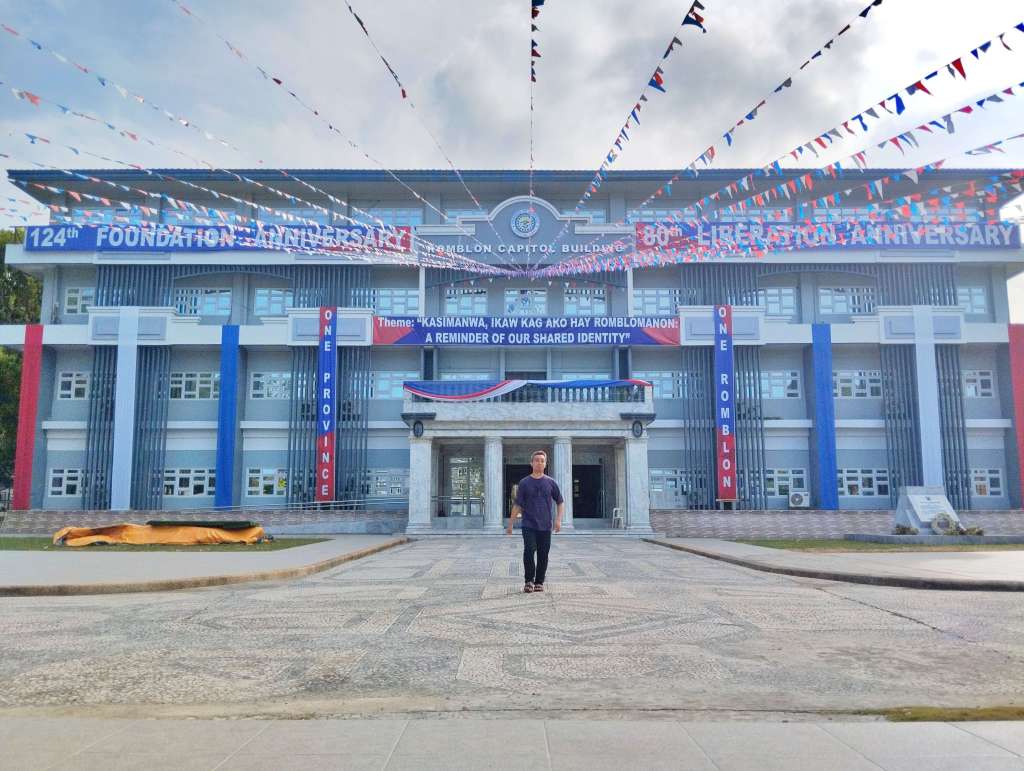
Barangay Capaclan in the municipality hosts the Romblon Provincial Capitol Complex, where the governor, the vice governor, and the Sangguniang Panlalawigan hold office. The municipal government is seated in Barangay II.
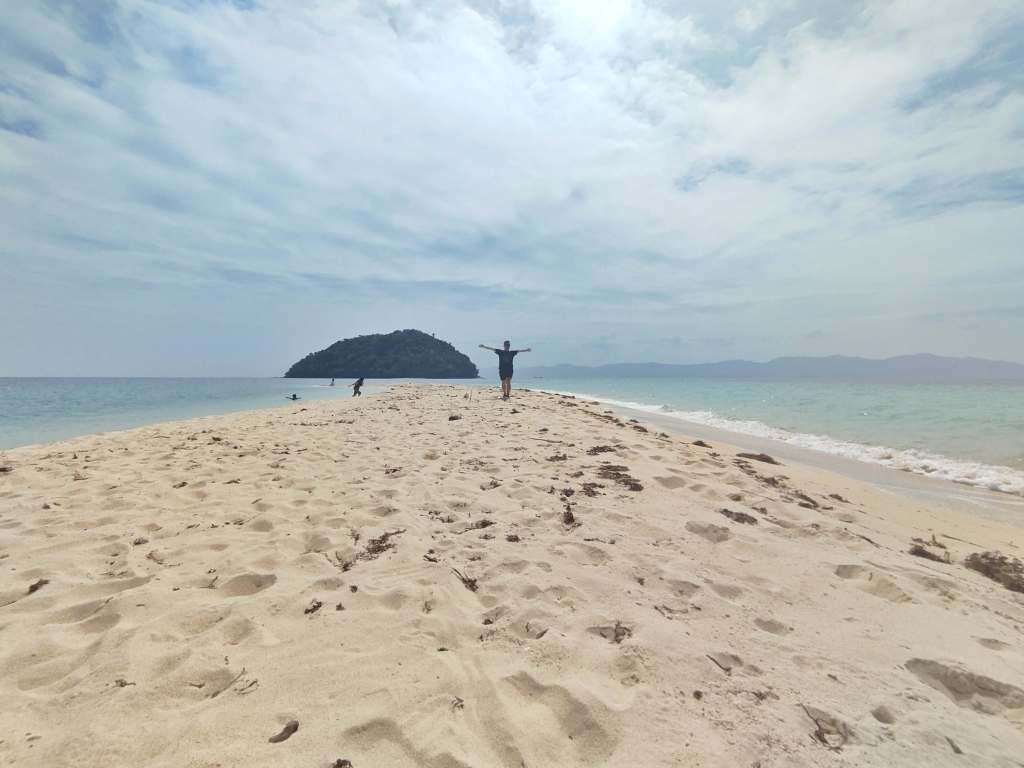
Bonbon Beach on Romblon Island in the Philippines is one of the most beautiful stretches of sand in the world. It’s definitely the best beach in the Romblon Province and the sandbar makes it an iconic location in the region. Located five kilometers away from town proper this shoreline in Barangay Lonos is covered with fine white sand and features a gradually sloping ocean floor free of sea grass and sharp stones. Entrance fee via LGU’s walkway is Php20. The other popular entrance with Bonbon beach arch is Php60.
Taghilaw, a savory dish made from tender pork meat and intestines simmered in a tangy vinegar sauce. A local favorite, Taghilaw is similar to “dinuguan” but with a unique twist – no blood, just a rich, tangy sauce that perfectly complements the tender meat. It’s a delicious reflection of Romblon’s culinary heritage, blending simple ingredients into a mouthwatering experience.
Romblon Shopping Center hosts marble workshops and handicrafts for all souvenirs and trinkets where you can buy Romblomanon products before going home.
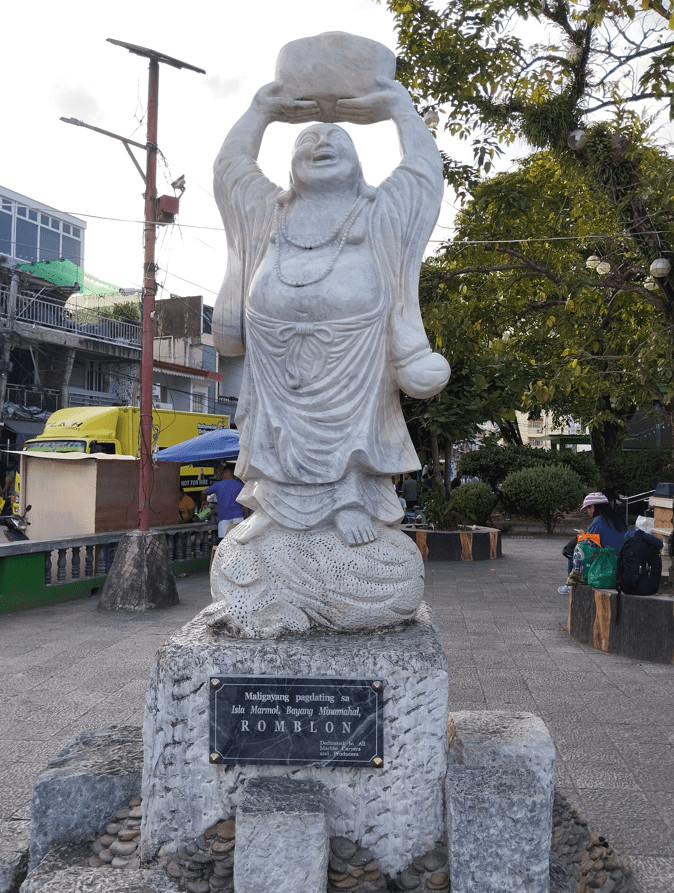
Romblon’s marble comes in a spectrum of shades ranging from white to black with a gamut of in-between tints like mottled white, tiger white, onyx and jade.
Relief Goods from Romblon! Mortar and pestle for Php120, IloveRomblon for Php45 and Refmagnets 3pcs for Php100.
TRAVEL EXPENSES (in Php): 1160 Batangas to Romblon Starlite Ferries Online Booking via Chelsea Travel (Reclining Seat) 1160 Romblon to Batangas Starlite Ferries Online Booking via Chelsea Travel (Economy Bed) 994.33 2D1N DRA Hotel via Agoda 268 Bus Buendia to Batangas Pier 30 Batangas Port Terminal Fee 20 Bonbon Beach Entrance Fee 15 Romblon Port Terminal Fee 290 Bus Batangas Pier to Buendia via Skyway









 Ben Goes Where