Pangasinan: The Salt-making Powerhouse of Northern Luzon
Whenever I go to the north, Pangasinan is the first province we traverse in Ilocos Region. Notable for Hundred Islands and Manaoag pilgrimage, I know there’s more to it so I spent my weekends visiting most of its central towns to visit churches, check town centers, deliciacies and some attractions.
Luzon is the largest and most populous island in the Philippines. It also refers to one of the three primary island groups in the country, and roughly divided into four sections: Northern, Central and Southern Luzon, and the National Capital Region. Among these, Northern Luzon has the most diverse ethnolinguistic groups such as the Cordillerans of the highlands and Ilocanos of the lowlands.
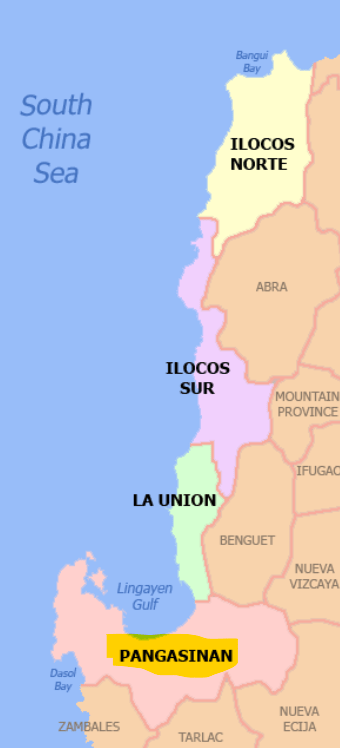
The Ilocos Region (Ilocano: Rehion/Deppaar ti Ilocos; Pangasinan: Sagor na Baybay na Luzon; Tagalog: Rehiyon ng Ilocos) is an administrative region of the Philippines, designated as Region I, occupying the northwestern section of Luzon. It is bordered by the Cordillera Administrative Region to the east, the Cagayan Valley to the northeast and southeast, and the Central Luzon to the south. To the west lies the South China Sea. Highlighted is the province I’ve visited for this trip.
In this post, I’ll show some tourist destinations I visited in Pangasinan thru infographics per municipality/city. I’ll post here in my #project81 the articles related to each province.
Pangasinan, officially the Province of Pangasinan (Pangasinan: Luyag/Probinsia na Pangasinan, Ilocano: Probinsia ti Pangasinan; Tagalog: Lalawigan ng Pangasinan), is a coastal province in the Philippines located in the Ilocos Region of Luzon. Its capital is Lingayen. Pangasinan is in the western area of Luzon along Lingayen Gulf and the South China Sea. It has a total land area of 5,451.01 square kilometres (2,104.65 sq mi). The western portion of the province is part of the homeland of the Sambal people, while the central and eastern portions are the homeland of the Pangasinan people. Due to ethnic migration, the Ilocano people settled in the province. The name Pangasinanmeans “place of salt” or “place of salt-making”; it is derived from the prefix pang-, meaning “for”, the root word asin, meaning “salt”, and suffix -an, signifying “location”. My 10th province!
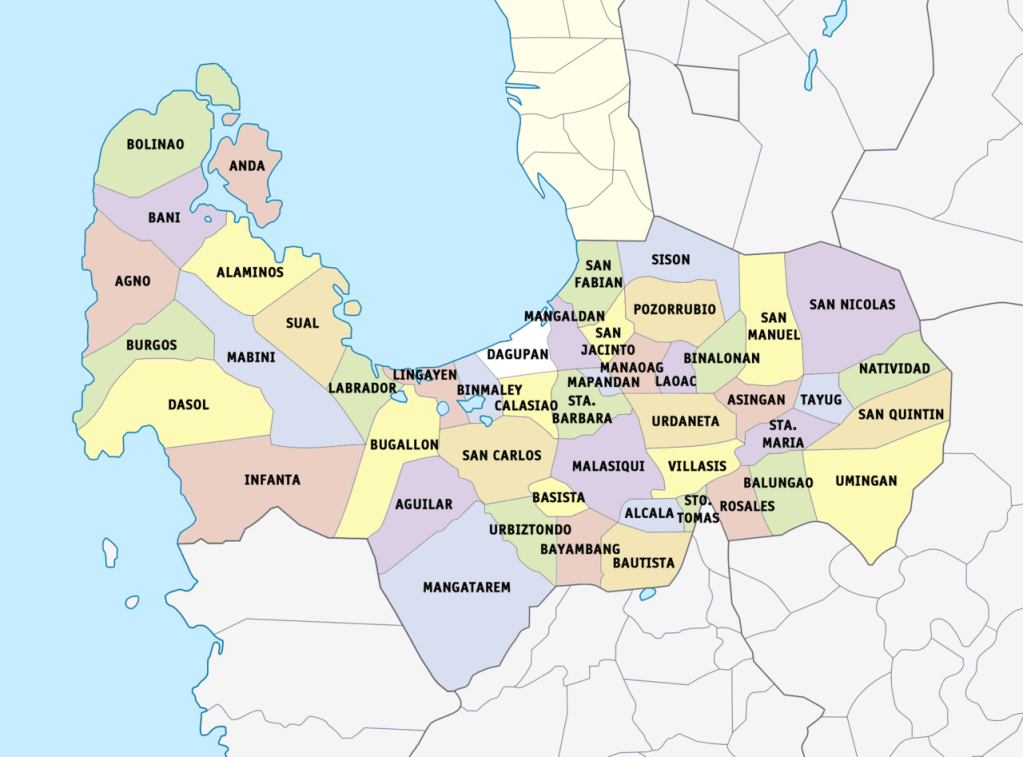
The province of Pangasinan is subdivided into 44 municipalities and 4 cities. The capital of the province is Lingayen.
Central Pangasinan: Manaoag-Dagupan City-Calasiao-Binmaley-Lingayen-Bugallon (Salasa)-Aguilar-Mangatarem
Manaoag, officially the Municipality of Manaoag (Pangasinan: Baley na Manaoag; Ilocano: Ili ti Manaoag; Tagalog: Bayan ng Manaoag), is a 1st class municipality in the province of Pangasinan, Philippines. Manaoag came from the Pangasinan word “Mantaoag” which means “to call“.
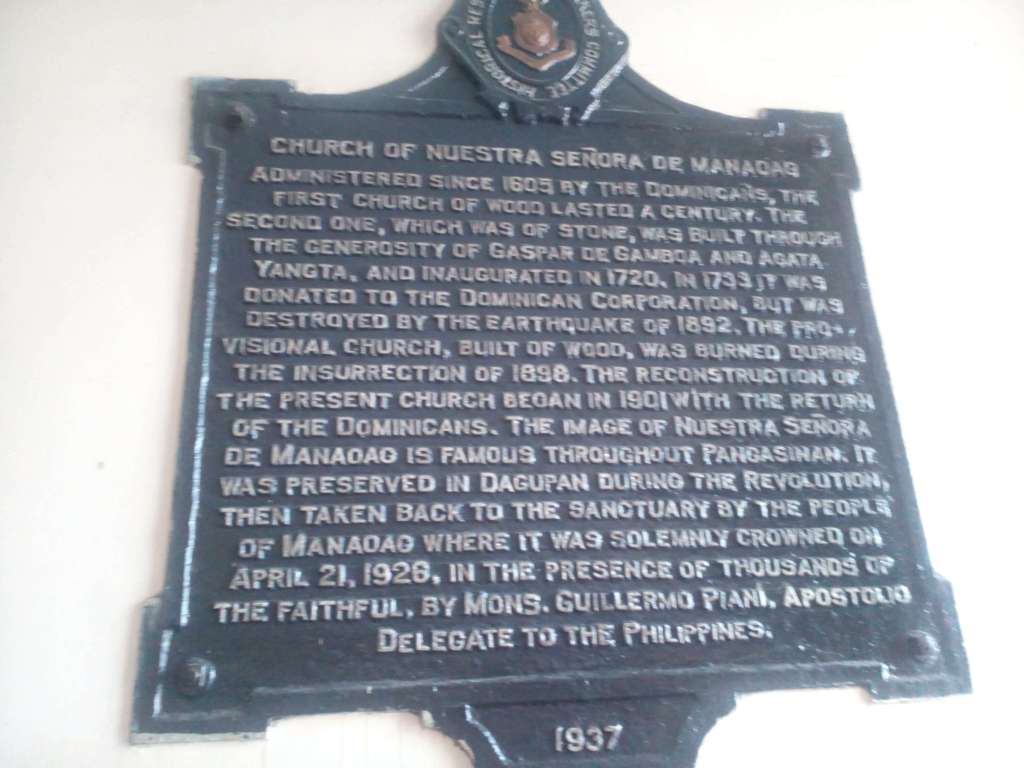
The Minor Basilica of Our Lady of the Rosary of Manaoag, commonly known as Manaoag Church, is a Roman Catholic minor basilica located in Manaoag, Pangasinan in the Philippines. The shrine is dedicated to the Blessed Virgin Mary under the title of Our Lady of the Rosary. The original shrine was founded in 1600, it is administered by the Order of Preachers and is a popular tourist and pilgrimage site among devotees. A petition to elevate the shrine to a minor basilica was sent on August 15, 2014, the Feast of the Assumption of Mary. On October 11, 2014, Pope Francis granted the petition elevating the shrine as a minor basilica. The shrine was solemnly declared a minor basilica on February 17, 2015.
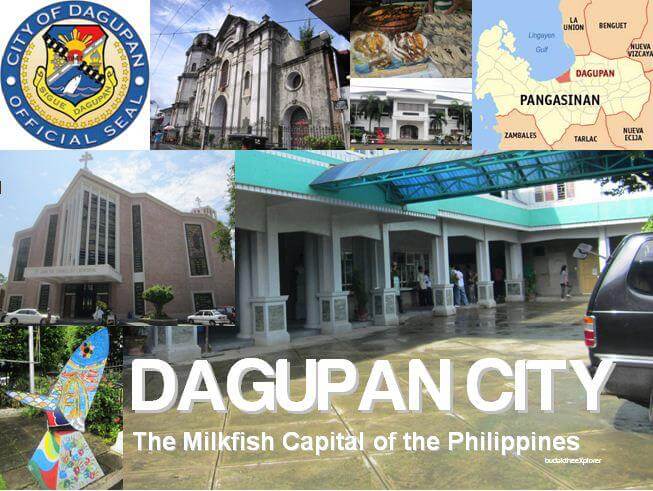
Dagupan, officially the City of Dagupan (Pangasinan: Siyudad na Dagupan, Ilocano: Siudad ti Dagupan, Filipino: Lungsod ng Dagupan), is a 1st class independent component city in the Ilocos Region, Philippines. Located on Lingayen Gulf on the northwest-central part of Luzon, Dagupan is a major commercial and financial center north of Manila. Also, the city is one of the centers of modern medical services, education, media and communication in North-Central Luzon. The NEDA-Regional Development Council officially establishes Dagupan as a regional center. The city is situated within the fertile Agno River Valley and is in turn a part of the larger Central Luzon plain. Dagupan is administratively and politically independent from the provincial government of Pangasinan and is only represented by the province’s legislative district. The city’s name was derived from the local Pangasinan word pandaragupanwhich means gathering place as the city has been a regional market center for centuries. The root word is dagop, Pangasinan term of gather.
The city is among the top producers of milkfish (locally known as bangus) in the province. The Dagupan Bangus is the epitome of Dagupan’s best. The Betel, a local term for bangus, is the tastiest milkfish in the world. It is the same bangus that catapulted the city to fame as the Bangus Capital of the World. The Dagupan Bangus is cooked and served in 101 ways by restaurants in the city. Among the favorite recipes are inkalot (grilled), fried boneless daing (sun-dried) and insular or sinigang (sour-soup) na Bangus.
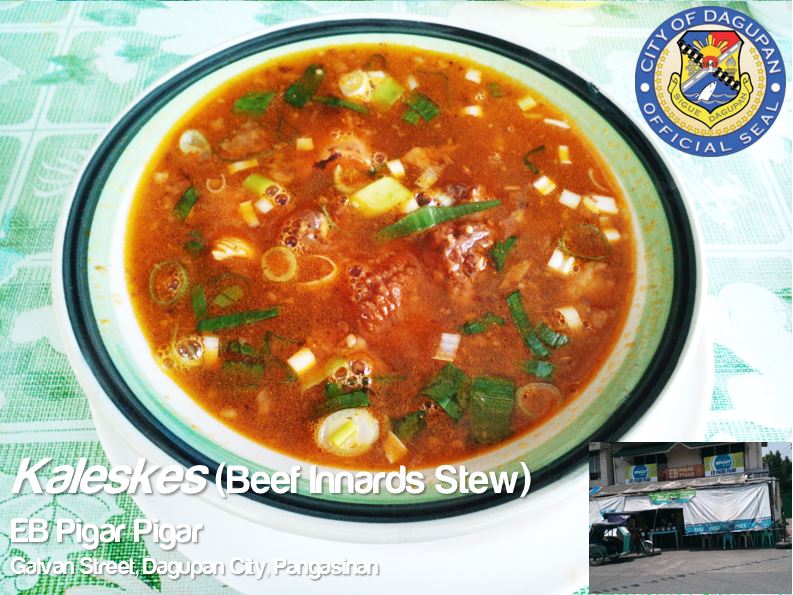
Pigar Pigar, a flake of beef or carabao meat, seasoned with salt and pepper, piled and mixed with lightly limped onions and fried in beefy-tasting oil. It is also garnished with vegetables like cauliflower and cabbage. To the non-cholesterol conscious, one can ask for slices of beef fat to add zest to the meat. Stalls that offer this dish are located in Galvan Street.
Kaleskes is another dish unique to Dagupan and other towns of Pangasinan. Kaleskes is a Pangasinan word for intestines or innards. Stalls in Herrero-Perez sell the slowly-boiled beef and beef offal and are cooked on wood-fired stoves.
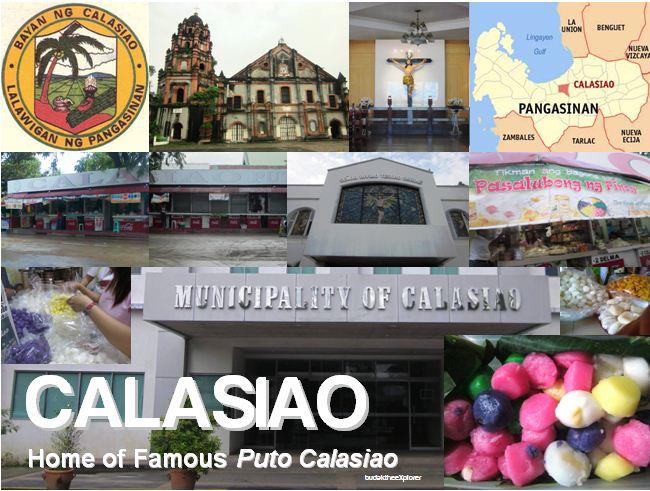
Calasiao, officially the Municipality of Calasiao (Pangasinan: Baley na Calasiao; Ilocano: Ili ti Calasiao; Tagalog: Bayan ng Calasiao), is a 1st class municipality in the province of Pangasinan, Philippines. Today, Calasiao is known as a first class, highly commercialized municipality and is strategically located at the heart of Pangasinan. Being a town adjacent to the city of Dagupan, the municipality experiences continuous economic boom and is increasingly becoming an important satellite commercial hub for Metro Dagupan. Calasiao is 3 kilometres (1.9 mi) from Dagupan, 18 kilometres (11 mi) from Lingayen and 206 kilometres (128 mi) from Manila. The name Calasiao was derived from the native word Kalasian, which means “a place where lightning frequently occurs”, from the root word lasi, meaning “lightning”. Upon the arrival of the Spaniards, they called the place “Lugar de Rayos“, a literal Spanish translation of the word Kalasian. It was named as such because it is said that Calasiao back in the day was always frequented by this natural phenomenon.
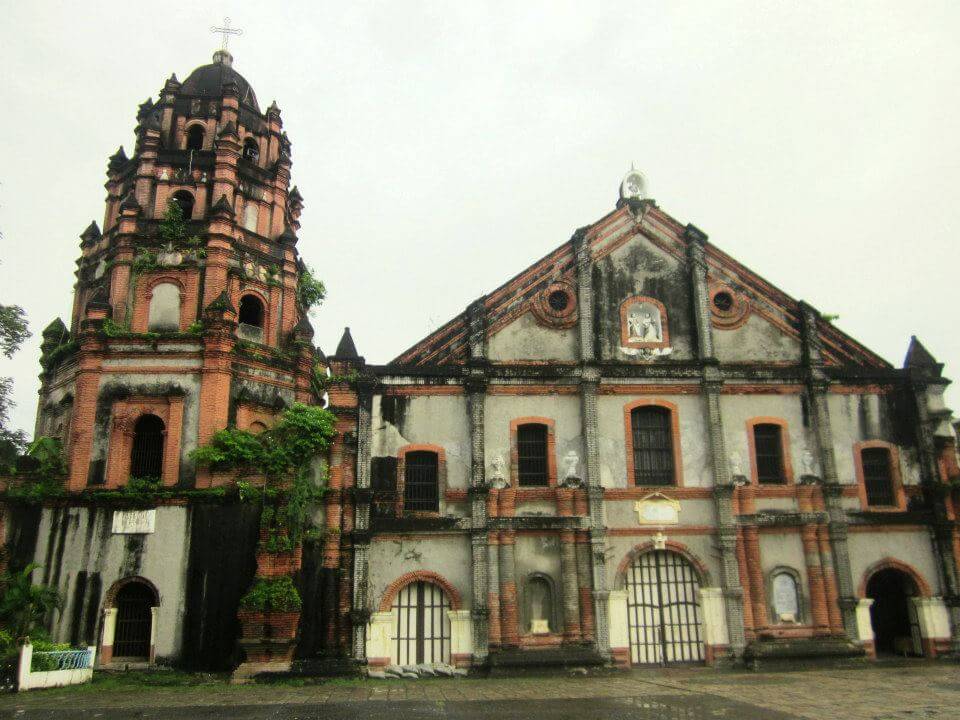
The Saints Peter and Paul Parish Church (Spanish: Iglesia Parroquial de los Santos Pedro y Pablo), commonly known as Calasiao Church, is a baroque church located in Poblacion West, Calasiao, Pangasinan, Philippines. It belongs to the Vicariate of Sts. Peter and Paul under the Ecclesiastical Province of the Roman Catholic Archdiocese of Lingayen-Dagupan. The Spanish-colonial-era Church was declared a National Cultural Treasure by the National Museum of the Philippines and the National Commission for Culture and the Arts.
In terms of delicacy, Calasiao’s flagship product is the native rice cake known as Puto Calasiao. Calasiao puto is described as the town’s “white gold.” Calasiao puto is a bite-size, soft rice cake made from semi-glutinous rice that is fermented in earthen jars. It is produced mainly in Barangay Dinalaoan.
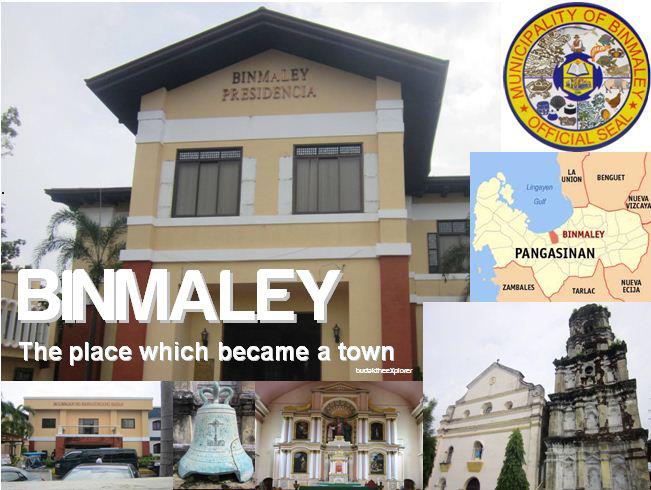
Binmaley, officially the Municipality of Binmaley (Pangasinan: Baley na Binmaley; Ilocano: Ili ti Binmaley; Tagalog: Bayan ng Binmaley), is a 1st class municipality in the province of Pangasinan, Philippines. Binmaley is 4 kilometres (2.5 mi) from Lingayen and 210 kilometres (130 mi) from Manila. Its name roughly means “the place which became a town” or “went to town” in the Pangasinan language.
Lingayen, officially the Municipality of Lingayen (Pangasinan: Baley na Lingayen; Ilocano: Ili ti Lingayen; Tagalog: Bayan ng Lingayen), is a 1st class municipality and capital of the province of Pangasinan, Philippines. It is the capital and the seat of government of the province of Pangasinan. Lingayen was a strategic point during World War II. It is also the birthplace of former President Fidel V. Ramos. The word “Liñgayen” was from the Pangasinan language word “lingawen” meaning “to look back“. Since then up to the present time the town bears its name as Lingayen. Lingayen became the capital of Pangasinan when the province became an encomienda.
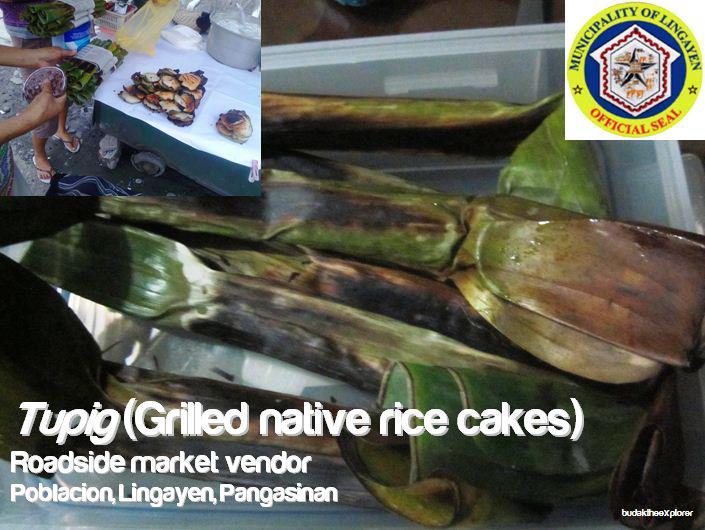
Tupig, also known as intemtem or kangkanen, is a Filipino rice cake originating from northwestern Luzon, particularly the regions of Pangasinan, Tarlac, and Ilocos. It is made from ground slightly-fermented soaked glutinous rice (galapong) mixed with coconut milk, muscovado sugar, and young coconut (buko) strips. It is wrapped into a cylindrical form in banana leaves and baked directly on charcoal, with frequent turning. The name tupig means “flattened”, in reference to its shape after cooking. It is popularly sold as street food in Pangasinan, particularly during the Christmas season. It is typically eaten with ginger tea (salabat).
Bugallon, officially the Municipality of Bugallon (Pangasinan: Baley na Bugallon; Ilocano: Ili ti Bugallon; Tagalog: Bayan ng Bugallon), is a 2nd class municipality in the province of Pangasinan, Philippines. Bugallon is 8 kilometres (5.0 mi) from Lingayen and 198 kilometres (123 mi) from Manila. The Municipality of Bugallon was formerly called “Salasa” (meaning floor joist in the dialect, a part of a wooden house where the floor is attached to). In the Spanish colonial era, the Spanish authorities established the town center in Poblacion (now Barangay Salasa). Because of the 1914 massive flooding and erosion, the town center was later transferred to Barrio Anagao (became Barangay Poblacion) but the Our Lady of Lourdes Catholic Church, one of the oldest churches in the country, could not be transferred (every time someone attempts, he dies). A new Catholic church was created in the Poblacion, the Saint Andrew Catholic Church. This is the reason why Bugallon has two Catholic Churches (one in Salasa and the other in Anagao). The town was named after the town’s hero Major Jose Torres Bugallon who fought together with Gen. Antonio Luna during the Philippine–American War in 1899. February 5, 1899, at the Battle of La Loma, Bugallon faced Gen. Arthur MacArthur. Bugallon suffered a shot to the thigh during the battle. Later that day, in the arms of Antonio Luna, Bugallon died from excessive loss of blood. In 1921, the town of Salasa was renamed to Bugallon.
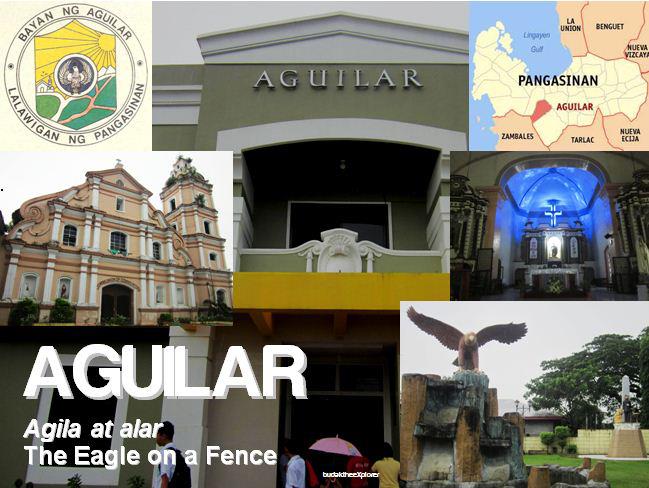
Aguilar, officially the Municipality of Aguilar (Pangasinan: Baley na Aguilar; Ilocano: Ili ti Aguilar; Tagalog: Bayan ng Aguilar), is a 3rd class municipality in the province of Pangasinan, Philippines. The municipality was named after Spanish governor-general Rafael María de Aguilar, who ordered the establishment of an independent civil political unit on 16 July 1805. Aguilar is 16 kilometres (9.9 mi) from provincial capital Lingayen and 190 kilometres (120 mi) from Manila.
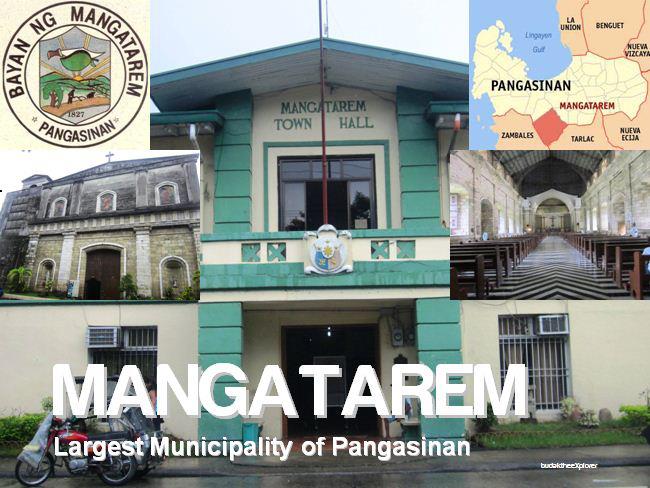
Mangatarem, officially the Municipality of Mangatarem (Pangasinan: Baley na Mangatarem; Ilocano: Ili ti Mangatarem; Tagalog: Bayan ng Mangatarem), is a 1st class municipality in the province of Pangasinan, Philippines. The Municipality is home to the Manleluag Hot Spring Protected Landscape located in Barangay Malabobo near the southern boundary of the municipality. Mangatarem is 29 kilometres (18 mi) from provincial capital Lingayen and 177 kilometres (110 mi) from Manila. Mangatarem is a Pangasinan word for “mango plantation“. The town’s name also came from the Ilocano Phrase “mangga ken tirem” which means “mango and oyster“.
The following city and town were visited on separate occasions, as you can extend your route westward:
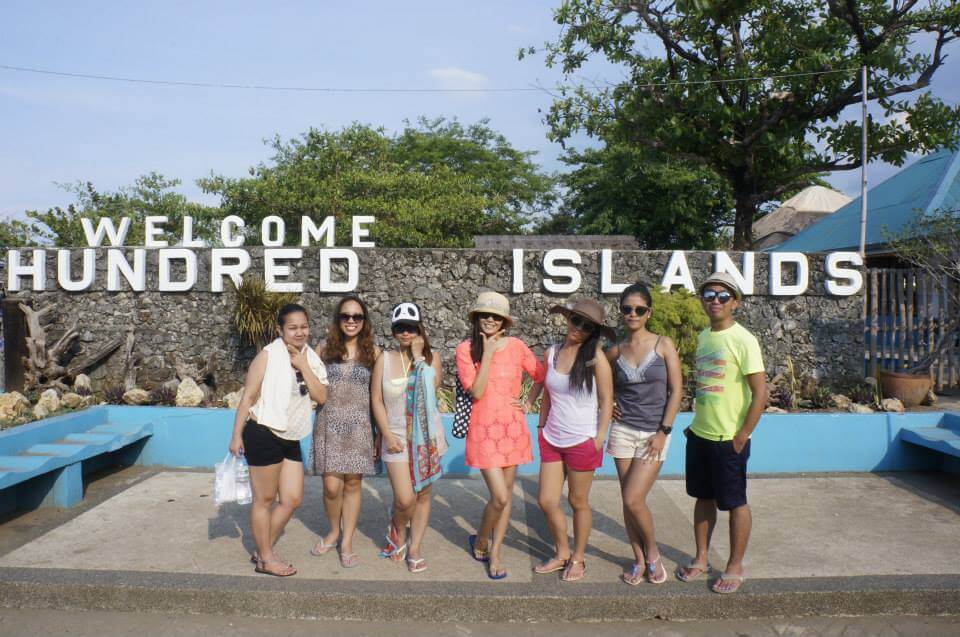
Alaminos, officially the City of Alaminos (Pangasinan: Siyudad na Alaminos; Ilocano: Siudad ti Alaminos; Sambal: Babali nin Alaminos; Filipino: Lungsod ng Alaminos), is a 4th class component city in the province of Pangasinan, Philippines, and is known for being the home of the Hundred Islands National Park, which is composed of 124 islands and is located off the coast of Barangay Lucap. Alaminos is named after the Spanish general Juan Alaminos y Vivar, who served as Governor-General of the Philippines from 1873 to 1874 and was much loved by locals as he visited to the then-town in 1860. Previously named Sarapsap, it was renamed in his honor in 1872.
The Hundred Islands National Park is the first Philippine national park and a protected area located in Alaminos, Pangasinan. The islands, totaling 124 at low tide and 123 at high tide, are scattered in Lingayen Gulf covering an area of 16.76 square kilometres (6.47 sq mi). Only four of them had been developed for tourism: Marcos Island, Governor Island, Quezon Island, and Children’s Island. The islands are believed to be about two million years old. There are actually ancient corals that extend well inland, in an area previously comprising the seabed of an ancient sea. The lowering of the sea level have exposed them to the surface. The peculiar “mushroom-like” shapes of some of the islands were caused by the eroding action of ocean waves.
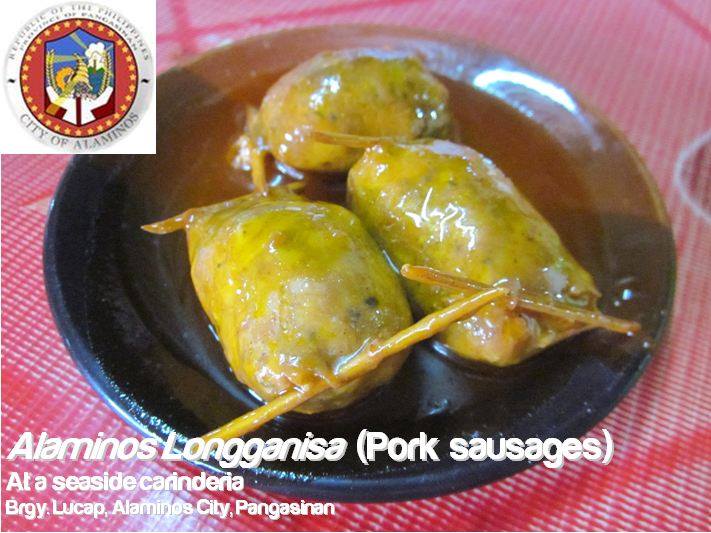
Taste the goodness of ground pork and garlic delectably mixed with spices and easily spotted with the signature toothpicks separating each longanisa.
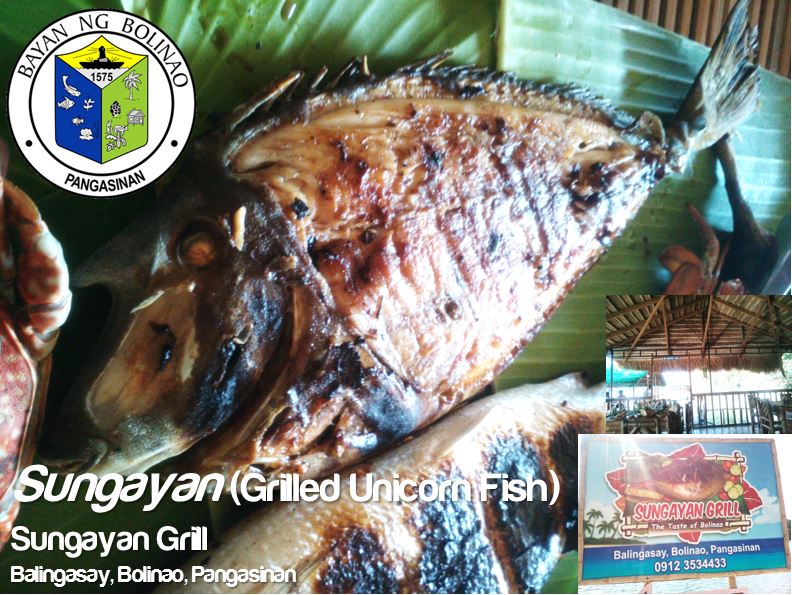
Bolinao, officially the Municipality of Bolinao (Bolinao: Babali nin Bolinao; Pangasinan: Baley na Bolinao; Ilocano: Ili ti Bolinao; Tagalog: Bayan ng Bolinao), is a 1st class municipality in the province of Pangasinan, Philippines. Folk etymology attributes the name “Bolinao”, a remote fishing enclave, from the fish specie “monamon” commonly called “bolinao” by the Tagalogs, Bicolanos and the Visayans. A theory also points out that once upon a time “pamulinawen” trees grew luxuriantly along its shores, thus, the Ilocano migrants who crossed Lingayen Gulf named it phonetically similar to the name of the tree in their language. Nowadays, however, such tree does not exist in abundance in the area.
The Cape Bolinao Lighthouse is a historic lighthouse in Bolinao, Pangasinan, Philippines. It was built in 1905 by a trio of American, British and Filipino engineers. Situated at an elevation of 107 meters (351 ft) above sea level, it is the second highest lighthouse in the Philippines next to the Cape Bojeador Lighthouse. The lighthouse tower itself stands 30.78 meters (101.0 ft) high.
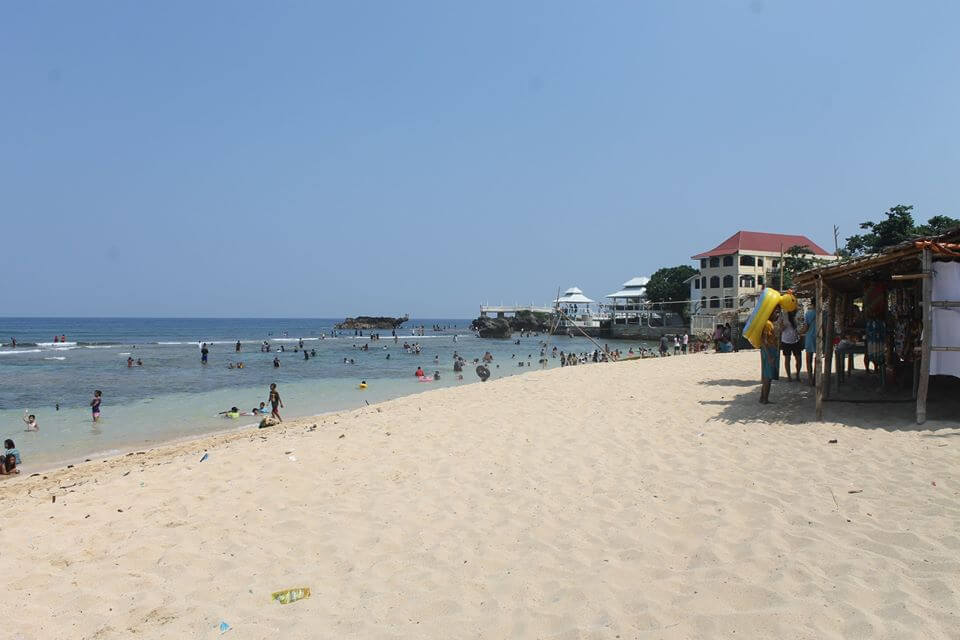
Patar Beach is the most famous beach in Bolinao, Pangasinan. The beach is graced by magnificent white sands, clear blue water, and scenic views, creating a serene atmosphere you badly need to escape from a bustling lifestyle.
Binunguey is a local delicacy of Bolinao. The word ‘binungey’ comes from the the Pangasinan word “nungey” which means cooked in bamboo. Try this sticky rice cake cooked inside the bamboo tubes. This delectable treat is best paired with ripe mango, sugar or caramel. Originally, it is found in the City of Alaminos, but it is more developed by Bolinao men who introduced the product to the people.
Central Pangasinan North-South Route: San Fabian-Mangaldan-Santa Barbara-San Carlos City-Malasiqui-Bayambang
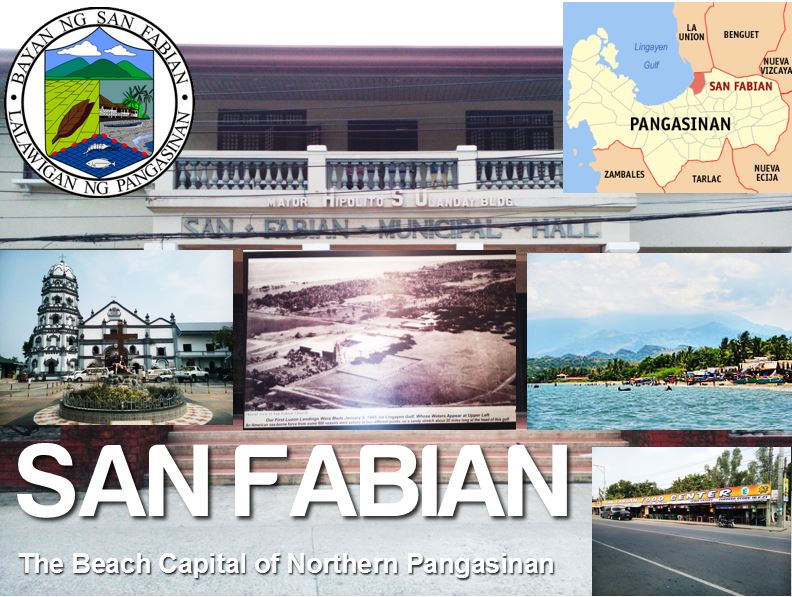
San Fabian, officially the Municipality of San Fabian (Pangasinan: Baley na San Fabian; Ilocano: Ili ti San Fabian; Tagalog: Bayan ng San Fabian), is a 1st class municipality in the province of Pangasinan, Philippines. The town got its name after Saint Fabian during the Spanish era.
Mangaldan, officially the Municipality of Mangaldan (Pangasinan: Baley na Mangaldan; Ilocano: Ili ti Mangaldan; Tagalog: Bayan ng Mangaldan), is a 1st class municipality in the province of Pangasinan, Philippines. Mangaldan celebrates its annual Pindang Festival along with its town fiesta during first week of March. The popular carabeef tapa (Filipino-style dried meat), locally known as Pindang is the One Town One Product (OTOP) of this municipality. The municipality is also the home of the original makers of the famous delicacy – the Romana Peanut Brittle. Mangaldan got its name where the famous version relates that one day a Spanish missionary inquired from one inhabitant about the name of the place in the Spanish language. Thinking that the missionary was asking for water, the inhabitant replied “MANGA-ALAY-ADAN”, which means “Adan is fetching”.
Santa Barbara, officially the Municipality of Santa Barbara (Pangasinan: Baley na Santa Barbara; Ilocano: Ili ti Santa Barbara; Tagalog: Bayan ng Santa Barbara), is a 1st class municipality in the province of Pangasinan, Philippines. The town of Santa Barbara lies on a plain terrain in the northern part of the Agno Valley, at the center of Pangasinan. It is just west of the business center of Urdaneta City, with centuries-old mango trees lining the national highway to Santa Barbara. Although a large part of Santa Barbara is fast getting urbanized, the main economic activity remains to farm. Rice remains its main crop. The second most important crop is mango of which the town is famous as the home of age-old Philippine mango seedling nurseries, a veritable home industry in town.
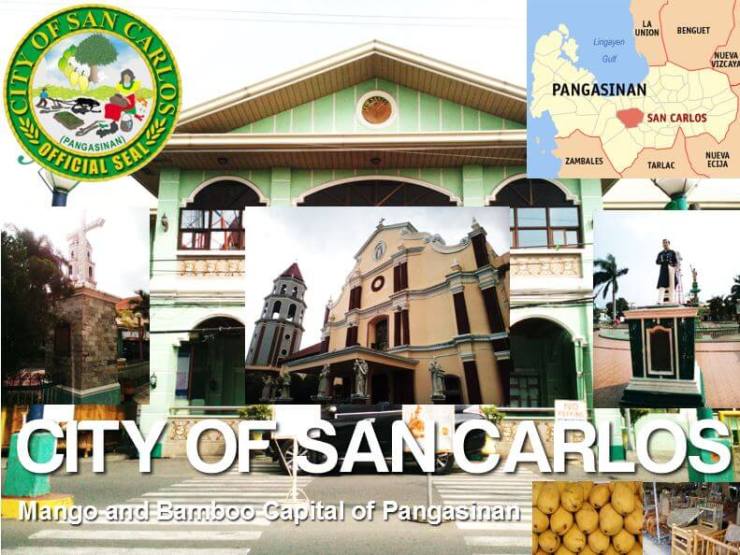
San Carlos City, officially the City of San Carlos (Pangasinan: Siyudad na San Carlos; Ilocano: Siudad ti San Carlos; Filipino: Lungsod ng San Carlos), is a 3rd class component city in the province of Pangasinan, Philippines. It is the most populated city in Pangasinan and the entire Ilocos Region. San Carlos City is 19 kilometers (12 mi) from Lingayen and 208 kilometers (129 mi) from Manila.
In 1718, Binalatongan was renamed San Carlos, in honor of Saint Charles Borromeo. The city is also called the “Mango-Bamboo Capital of the Philippines”, San Carlos has the largest number of mango trees – their fruits are among the most flavorsome in the country – and a thriving bamboocraft industry.The Minor Basilica of Saint Dominic, also known as the Saint Dominic Parish Church, is a Roman Catholic minor basilica located in San Carlos, Pangasinan in the Philippines. The church, made out of bricks or ladrillo, used to be the largest Catholic church in the Philippines during the late 18th century, The church was finished in 1773, under the administration of Father Cristobal Ausina. However, it was destroyed by three earthquakes in 1789, 1796, and 1799.
Malasiqui, officially the Municipality of Malasiqui (Pangasinan: Baley na Malasiqui; Ilocano: Ili ti Malasiqui; Tagalog: Bayan ng Malasiqui), is a 1st class municipality in the province of Pangasinan, Philippines. The word Malasiqui originates from the Pangasinan root word lasimeaning lightning. With prefix ma indicating high degree and suffix qui indicating place – Malasiqui means “place full of lightning“. It is mainly an agricultural municipality with rice, corn and tropical lowland vegetables as main crops. It is also famous for its mango fruits having one of the largest concentration of mango tree population in the Philippines.
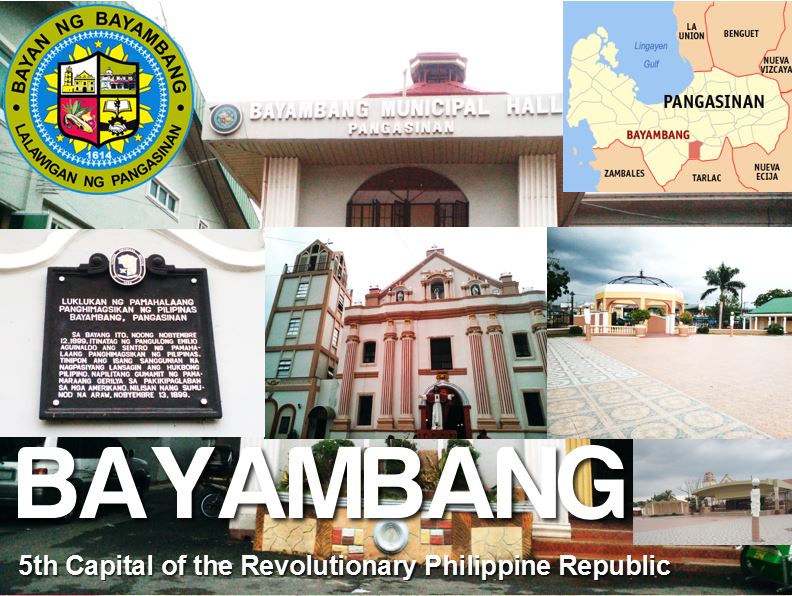
Bayambang, officially the Municipality of Bayambang (Pangasinan: Baley na Bayambang; Ilocano: Ili ti Bayambang; Tagalog: Bayan ng Bayambang), is a 1st class municipality in the province of Pangasinan, Philippines. It previously included the municipalities of Bautista, Alcala, Santo Tomas, Rosales, Paniqui, Gerona and Camiling. It was founded in the 16th century by Agalet, an Aeta. Bayambang is the former seat of the 5th Capital of the Revolutionary Philippine Republic. It celebrates its Malangsi Fishtival (1st week of April, “Kalutan tan Gayaga ed Dalan”). Bayambang is the seat of the Pangasinan State University and the Colleges of Nursing and Education. The name of this town according to the legend, came from the name of a plant called “balangbang” (Bauhinia acuminata) which grew in abundance during the early days. “Culibangbang” leaves were used for bulalong Iloko or sinigang.
For detailed posts about visita iglesia in Rizal, click on below link:


























 Ben Goes Where
1 thought on “Pangasinan: The Salt-making Powerhouse of Northern Luzon”