Caraga Region: Traversing the Northern Provinces and Dinagat Islands
One of my last Philippine regions to explore, Caraga is unspoilt and oozing with natural wonders that it was overshadowed by surfing island of Siargao. Since I have weekends to spare and got a promo fare to Butuan City, I went back again to Mindanao island to visit the northern Caraga provinces despite the long van rides.
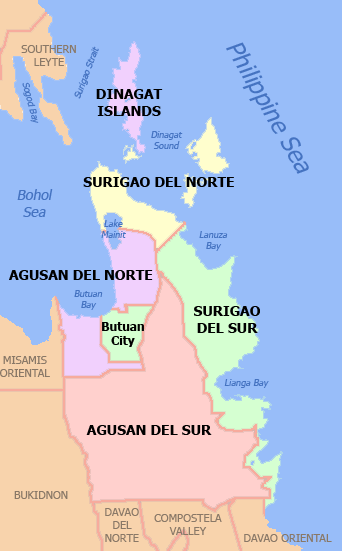
Caraga, officially the Caraga Administrative Region (or simply known as Caraga Region) and designated as Region XIII, is an administrative region in the Philippines occupying the northeastern section of Mindanao. The region was created through Republic Act No. 7901 on February 23, 1995. The region comprises five provinces: Agusan del Norte, Agusan del Sur, Dinagat Islands, Surigao del Norte, and Surigao del Sur; six cities: Bayugan, Bislig, Butuan, Cabadbaran, Surigao and Tandag; 67 municipalities and 1,311 barangays. Butuan, the most urbanized city in Caraga, serves as the regional administrative center. Caraga is named after the Kalagan people (Spanish “Caragan”), a Mansakan subgroup (related to Visayans) native to the regions of Davao and parts of Caraga who speak the Kalagan languages. The name itself is from kalagan(literally “[strong] spirited“) which means “fierce” or “brave”; from kalag (“spirit” or “soul”) in the native animistic anito religions. Hence, the whole Provincia de Caraga of AD 1622 was called region de gente animosa, that is “region of spirited folk”.
In this post, I’ll show some tourist destinations I visited in the northern provinces of Caraga region. This was followed by a post on Southern Caraga Region. I’ll post here in my #project81 the articles related to each province.
Northern Caraga Region: Butuan City-Surigao City-San Jose, Dinagat Islands-Surigao City-Butuan City (flight to Manila)
HIGHLIGHTS PER PROVINCE:
AGUSAN DEL NORTE Butuan City 📍Agusan del Norte Provincial Capitol 📍National Museum (Butuan branch) 📍Saint Joseph Cathedral 📍Guingona Park 📍Ramon Magsaysay Bridge 📍Agusan del Sur Provincial Tourism Office 📍Butuan City Hall 📍OTOP.Ph Hub Butuan and Madyaw Kadyaw Souvenir Shoppe for buying souvenirs
SURIGAO DEL NORTE Surigao City 📍Surigao del Norte Provincial Capitol 📍San Nicolas de Tolentino Cathedral 📍Battle of Surigao Strait Museum 📍Punta Bilar Light House 📍Surigao City Hall 📍Luneta Park 📍Surigao City Boulevard 📍Bayay Surigaonon 📍Surigao City Tourism Office 📍OTOP HUB Surigao City for buying souvenirs
DINAGAT ISLANDS San Jose 📍Dinagat Islands Provincial Capitol 📍San Jose Municipal Hall 📍Philippine Benevolent Missionaries Association (PBMA) Founder’s Shrine 📍Islander’s Castle 📍Port of San Jose
Bancasi Airport IATA: BXU, ICAO: RPME), also known as Butuan Airport, is the airport serving the general area of Butuan and Agusan del Norte. It is the only airport in Agusan del Norte and the largest in Caraga. The airport is classified as an International Airport by the Civil Aviation Authority of the Philippines (CAAP), a body of the Department of Transportation (DOTr) that is responsible for the operations of not only this airport but of all the other airports in the Philippines, except the major international airports.
Butuan, officially the City of Butuan (Cebuano: Dakbayan sa Butuan; Butuanon: Dakbayan hong Butuan; Filipino: Lungsod ng Butuan), is a 1st class highly urbanized city in the region of Caraga, Philippines. It is the de facto capital of the province of Agusan del Norte where it is geographically situated but has an administratively independent government. It served as the former capital of the Rajahnate of Butuan before 1001 until about 1521. The city used to be known during that time as the best in gold and boat manufacturing in the entire Philippine archipelago, having traded with as far as Champa, Ming, Srivijaya, Majapahit, and the Bengali coasts. It is located at the northeastern part of the Agusan Valley, Mindanao, sprawling across the Agusan River. It is bounded to the north, west and south by Agusan del Norte, to the east by Agusan del Sur and to the northwest by Butuan Bay. The name “Butuan” is believed to have originated from the sour fruit locally called batuan. Other etymological sources say that it comes from a certain Datu Buntuan, a chieftain who once ruled over areas of the present-day city.
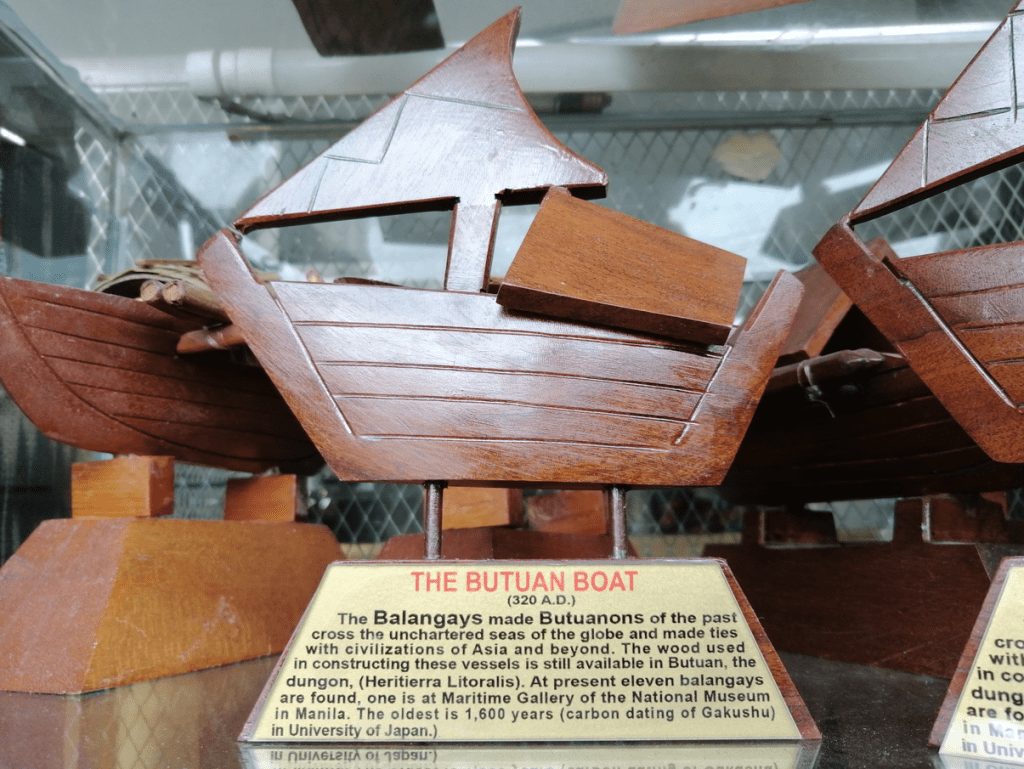
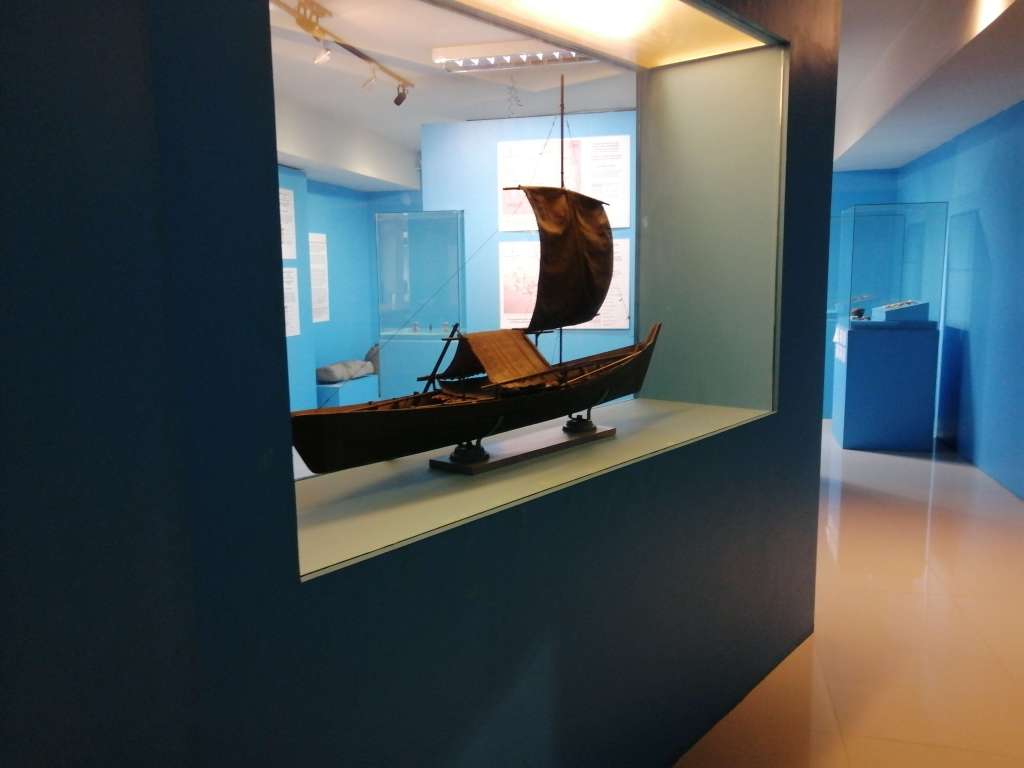
The Balangays (or Balanghai) are ancient boats that were found in Butuan. They were excavated in the Balangay Shrine, across the Masao River from Bood Promontory. They played a major role in Butuan because Butuan was, and still is, a port city. Since its discovery, the Balangays have become an icon of Butuan.
National Museum (Butuan City Branch) This museum is the repository of historical and cultural materials and artifacts that proves Butuan’s prehistoric existence and rich cultural heritage. There are two exhibit galleries. The Archaeological Hall and Ethnological Hall specimens of stone crafts, metal crafts, woodcrafts, potteries, goldsmith, burial coffins, and other archaeological diggings are exhibited. At the Ethnological Hall are exhibits of contemporary cultural materials the Butuanon or every Filipino for matter used for a living.
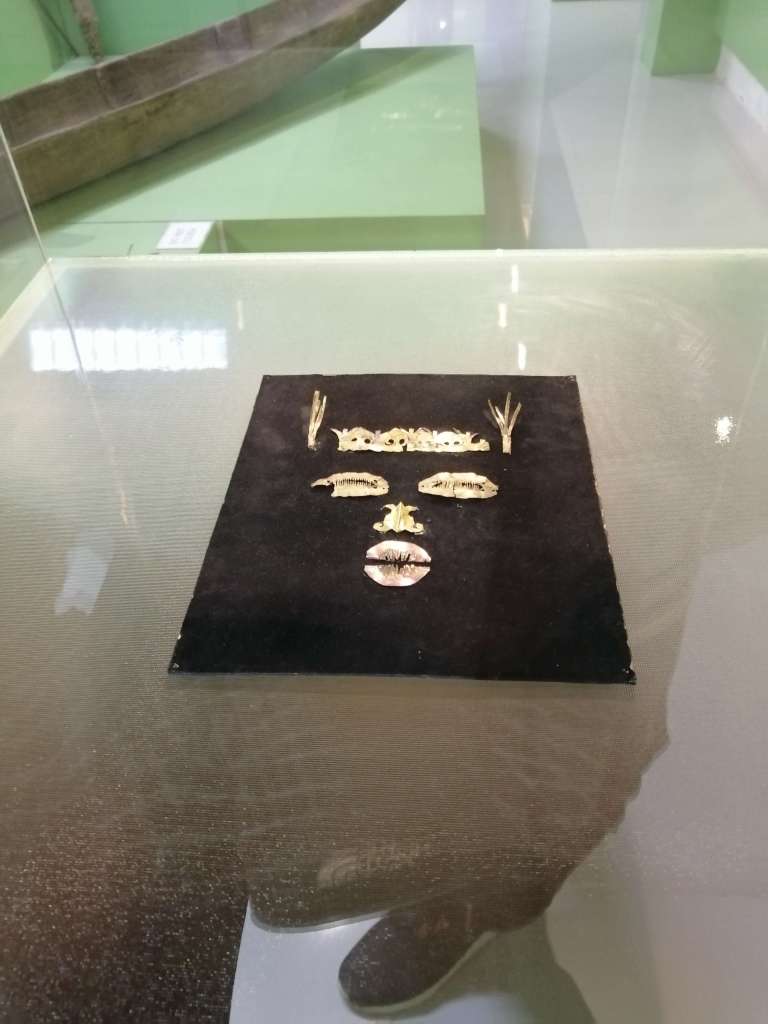
Butuan Death Mask The inhabitants of ancient Butuan in the Philippines, prior to Spanish contact, practiced burial traditions originating from the ancient southern Chinese peoples. Decorative sheet gold ornaments that represented features of the face were placed over the deceased’s head, eyes, nose and mouth in varying styles. It was believed this kept evil spirits from entering the body.
Replica statue of Golden Tara The Agusan image (commonly referred to in the Philippines as the Golden Tara in allusion to its supposed, but disputed, identity as an image of a Buddhist Tara) is a 2 kg (4.4 lb), 21-karat gold statuette, found in 1917 on the banks of the Wawa River near Esperanza, Agusan del Sur, Mindanao in the Philippines, dating to the 9th–10th centuries. The figure, approximately 178 mm (7.0 in) in height, is of a female Hindu or Buddhist deity, seated cross-legged and wearing a richly-adorned headdress and other ornaments on various parts of the body. It is now on display in the Field Museum of Natural History in Chicago
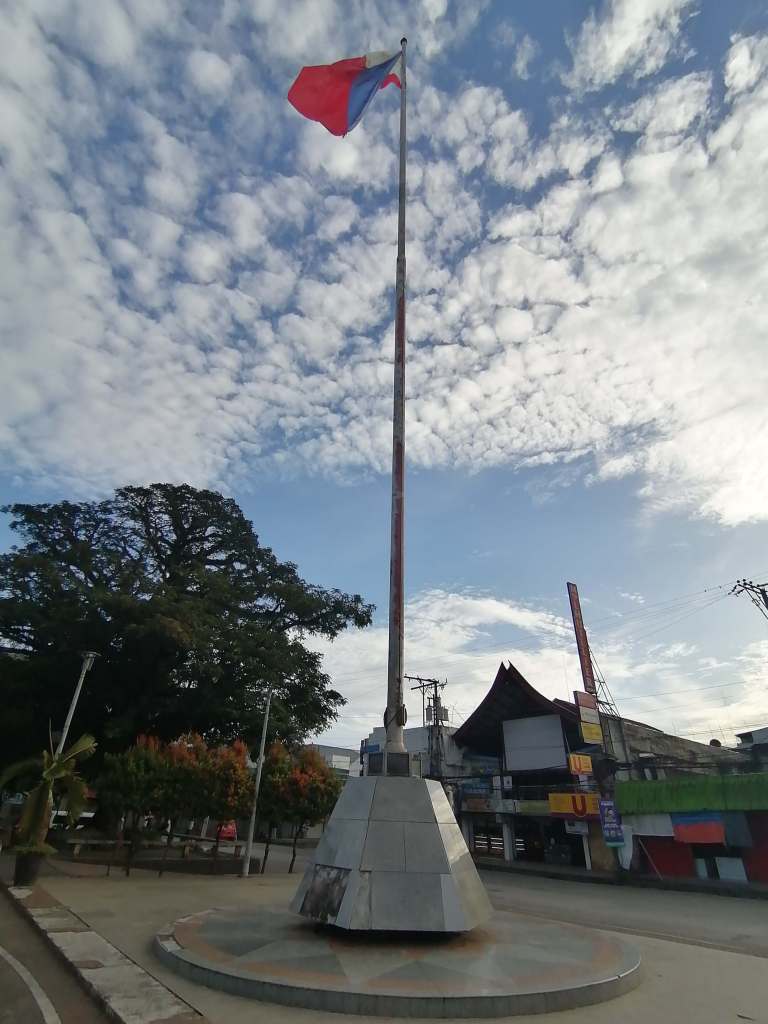
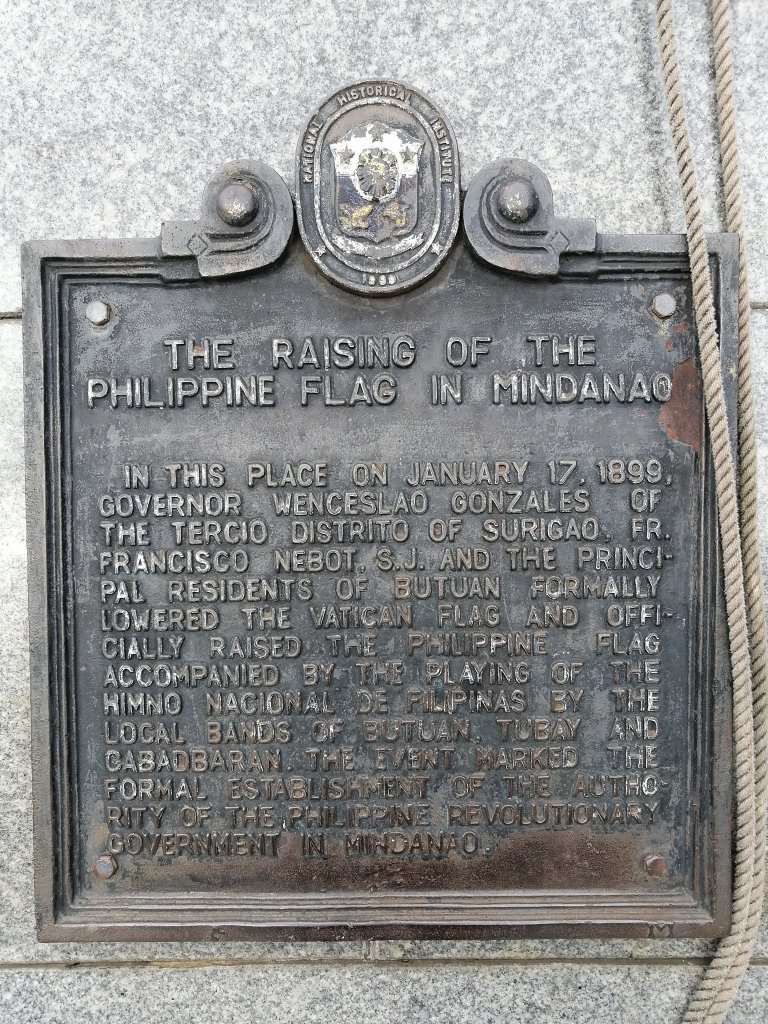
Guingona Park Guingona park is located at what used to be the public square or plaza of Butuan for many years. It is home to a large acacia tree that is more than a century old. On its ground is the Shrine of the Philippine Flag in Mindanao to commemorate the first fiormal raising of the Philippine Flag in Mindanao on January 17, 1899. The Giant Flag stays hoisted there night and day. The Rizal monument was done by the famous FIlipino sculptor, Garcia Velarde, in 1935, and this qualifies to be an important Cultural Propert under the Cultural Heritage Act of 2009.Agusan del Norte, officially the Province of Agusan del Norte (Cebuano: Amihanang Agusan; Butuanon: Probinsya hong Agusan del Norte; Tagalog: Hilagang Agusan), is a province in the Caraga region of the Philippines. Its capital is the city of Cabadbaran with several government offices located in the highly-urbanized city of Butuan. It is bordered on the northwest by Butuan Bay; northeast by Surigao del Norte; mid-east by Surigao del Sur; southeast by Agusan del Sur, and southwest by Misamis Oriental. Agusan derives its name from the Agusan word agasan, meaning “where the water flows“, referring to the Agusan River that splits the land and meanders south to north in a 250-kilometre (160 mi) rush to Butuan Bay. It is third largest river in the country and served as highway for the Spanish colonizers in gaining access to inner northeastern Mindanao.
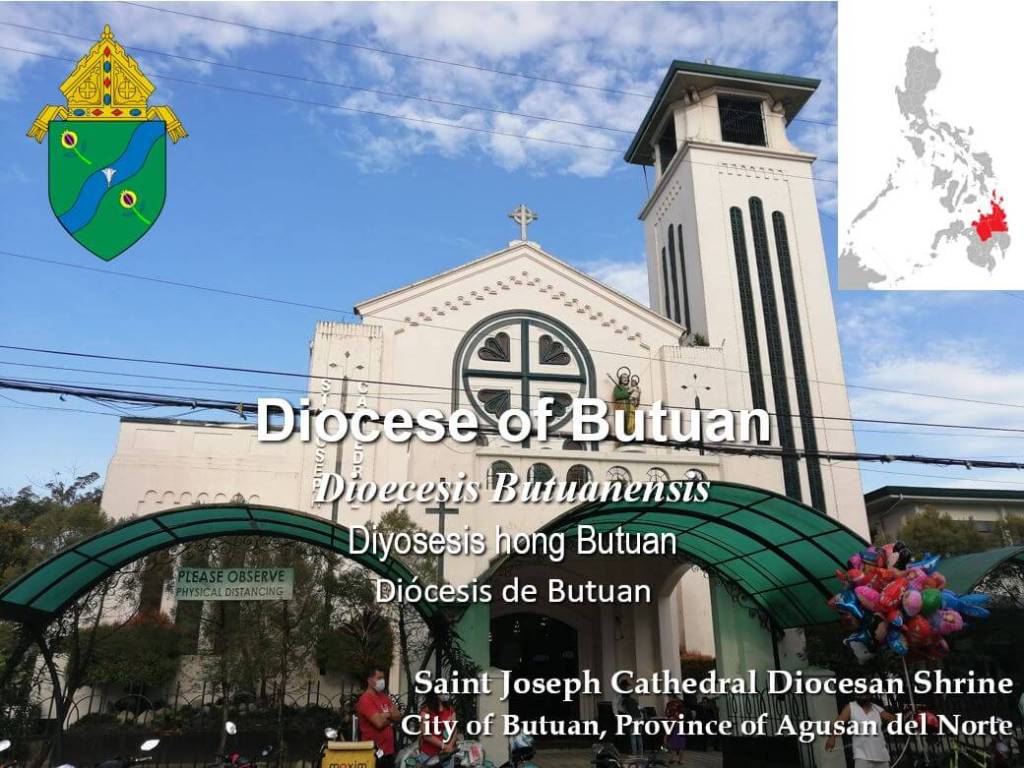
The Roman Catholic Diocese of Butuan (Lat: Dioecesis Butuanensis) is a diocese of the Latin Church of the Roman Catholic Church in the Philippines. Its territory comprises Butuan, Agusan del Norte and Agusan del Sur.
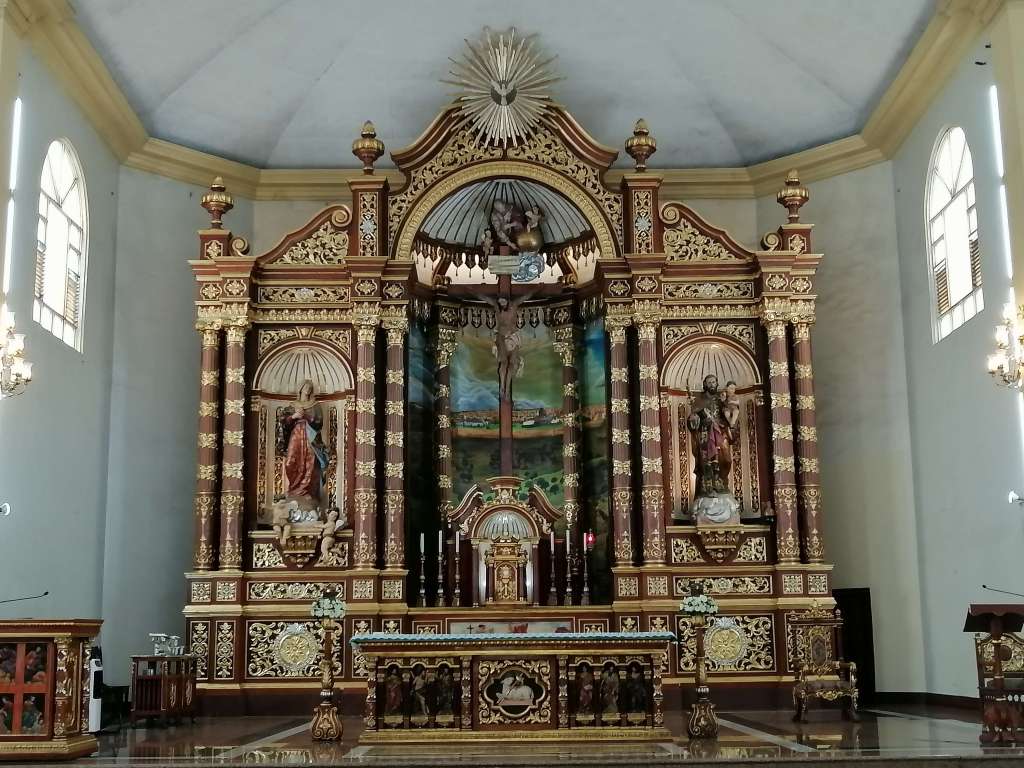
The Saint Joseph Cathedral is located in Ester Luna St., Butuan City, Agusan del Norte, Caraga, fronting Rizal Park. It is the seat of Roman Catholic Diocese of Butuan (Lat: Dioecesis Butuanensis).
Palagsing A brown, sticky suman made of unaw (sago starch). It is one of the delicacies in Butuan City Philippines. I bought this just in front of Butuan Cathedral where vendors flock every Sunday morning.
Surigao del Norte (Surigaonon: Probinsya nan Surigao del Norte; Cebuano: Amihanang Surigao; Tagalog: Hilagang Surigao), officially the Province of Surigao del Norte, is a province in the Philippines located in the Caraga region of Mindanao. The province was formerly under the jurisdiction of Region 10 (Northern Mindanao) until 1995. Its capital is Surigao City. The province comprises two major islands—Siargao and Bucas Grande—in the Philippine Sea, plus a small area at the northeastern tip of mainland Mindanao and other surrounding minor islands and islets. This mainland portion borders Agusan del Norte – between the Municipality of Alegria in Surigao del Norte and the Municipality of Kitcharao in Agusan del Norte; and the province of Surigao del Sur, to the south. Surigao del Norte is the second northernmost of the Mindanao provinces and is an important commerce and transportation hub between Visayas and Mindanao. Numerous ferries cross the Surigao Strait between Surigao and the island of Leyte transporting vehicles, cargoes, and passengers between Liloan in Southern Leyte and Surigao City. There are two hypotheses on the original meaning of “Surigao” among linguists, depending on the original root word. If the root word was taken to be sulig (“sprout” or “spring up”), then Surigao may have derived from suligao (“spring water“), likely referring to the Surigao River (known as “Suligaw” in Mandaya) that empties at the northern tip of the island of Mindanao. Early historical accounts record the name of the river as Suligao, Surigao, or Zurigan. Another possibility is that it is derived from Visayan surogao or suyogao, meaning “water current”. From suyog (also sulog or surog), “current”; cf. Sinulog, Sulu, and Tausug (Suluk).
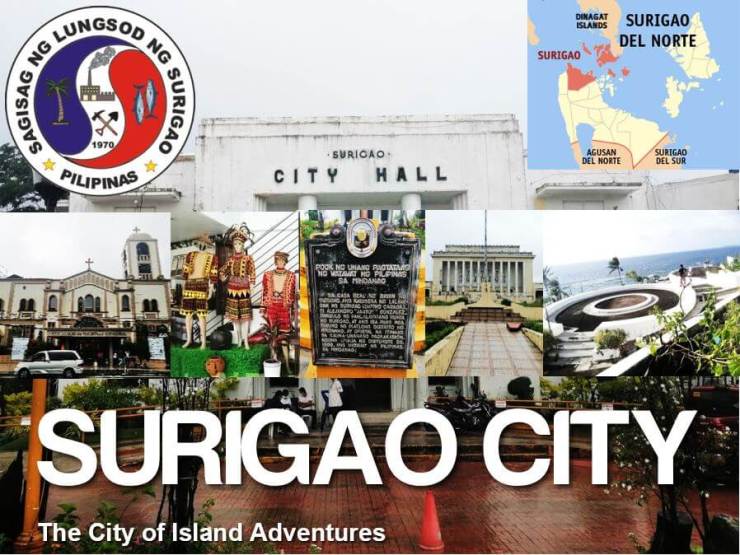
Surigao City, officially the City of Surigao (Surigaonon: Siyudad nan Surigao; Cebuano: Dakbayan sa Surigao; Filipino: Lungsod ng Surigao), is a 3rd class component city and capital of the province of Surigao del Norte, Philippines. The city is located at the north-easternmost tip of Mindanao. The absence of a fort in Surigao belies its significance and sphere of influence during the Spanish period. It was the capital of the expansive province of the same name from 1750 until its dissolution in 1911, covering a third of Mindanao Island’s total land area. It is one of the oldest port towns in Mindanao, founded by Spanish colonizers in 1655. It has abundant mineral reserves including gold, iron, manganese, silica, cobalt, copper, chromite and among the world’s largest nickel deposits in Nonoc Island. The city has been dubbed the mining capital since 1969 of the then Northern Mindanao region and still today as an economic driver of Caraga region.
Surigao City serves as a jump off point to visitors of nearby Siargao, Dinagat and Bucas Grande islands. It is Mindanao’s closest landmass to the Visayas region, separating the two island groups by eleven nautical miles across Surigao Strait. Surigao is the center of politics, commerce, banking, industry and education of Surigao del Norte and Dinagat Islands as well as parts of neighboring provinces of Surigao del Sur, Agusan del Norte and Southern Leyte.
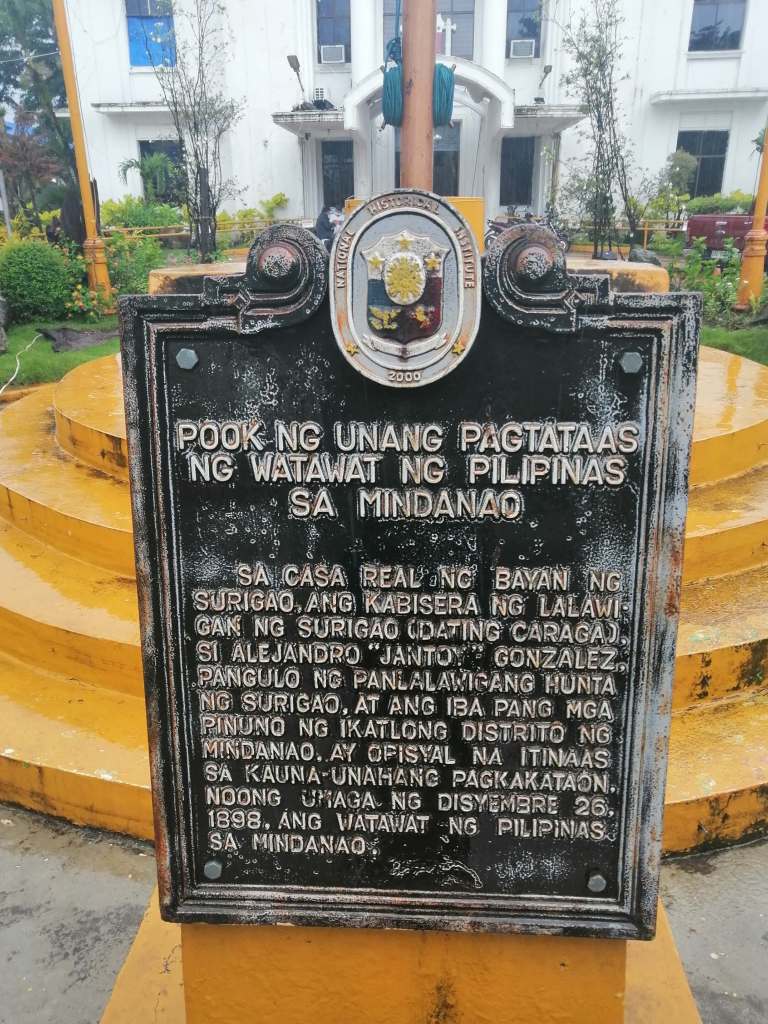
December 26: Commemoration of the First Hoisting of Philippine Flag in Mindanao – The Philippine flag in Mindanao was first raised in Surigao in the morning of December 26, 1898, at the Casa Real (town hall). The event was recorded in the diary of Fr. Alberto Masoliver, now kept in the Jesuit Archives in Spain.Battle of Surigao Strait Memorial Site and Museum This Memorial was built by the People of Surigao and its City Government to immortalize the heroism of those who served in the Battle of Surigao Strait during the World WAR II. Held every October 25, Battle of Surigao Strait in commemoration of the Last Great Battleship vs. Battleship Naval Battle of World War II, is highlighted by a pre-dawn memorial service, civil-military parade, and a memorial cruise along the Surigao Strait. Commemorating veterans, diplomats, consuls, and active naval personnel from the US, Australia, and Japan have been gracing the event over the past quarter century.
Punta Bilar is a barangay in Surigao City, in the province of Surigao del Norte. It is the northeasternmost point of Mindanao island. The lighthouse guides marine vessels passing Surigao strait.
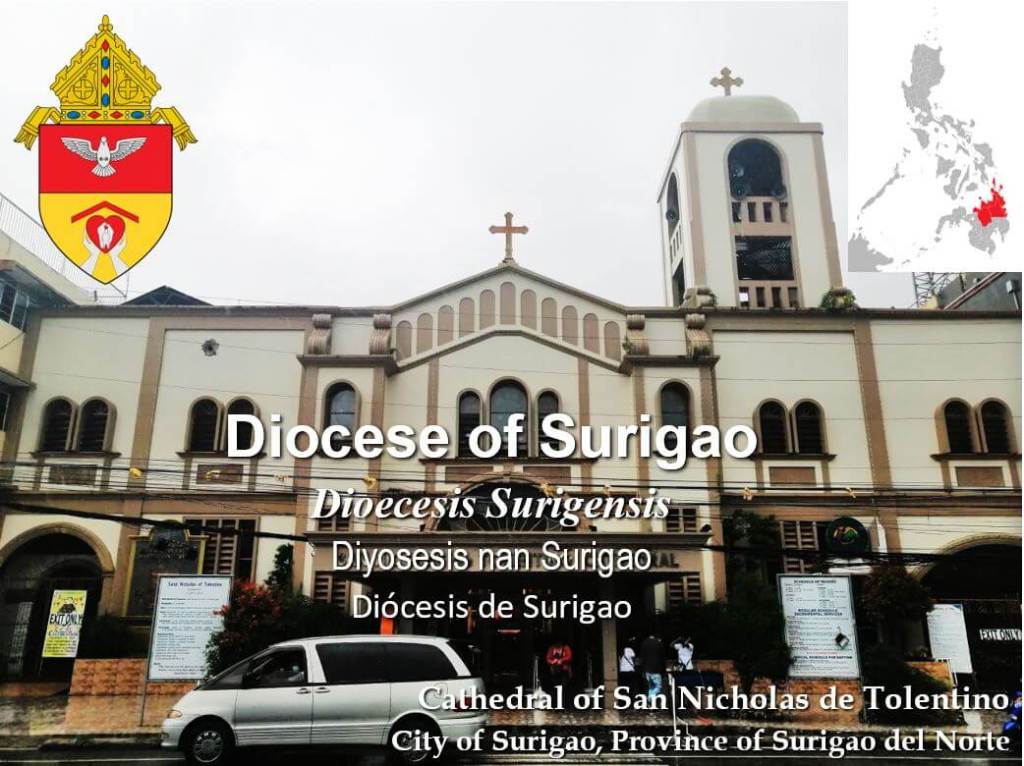
The Roman Catholic Diocese of Surigao (Lat: Dioecesis Surigensis) is a diocese of the Latin Church of the Roman Catholic Church in the Philippines. The diocese is a suffragan of the Archdiocese of Cagayan de Oro. The jurisdiction of this diocese are the two provinces of Surigao del Norte and Dinagat Islands
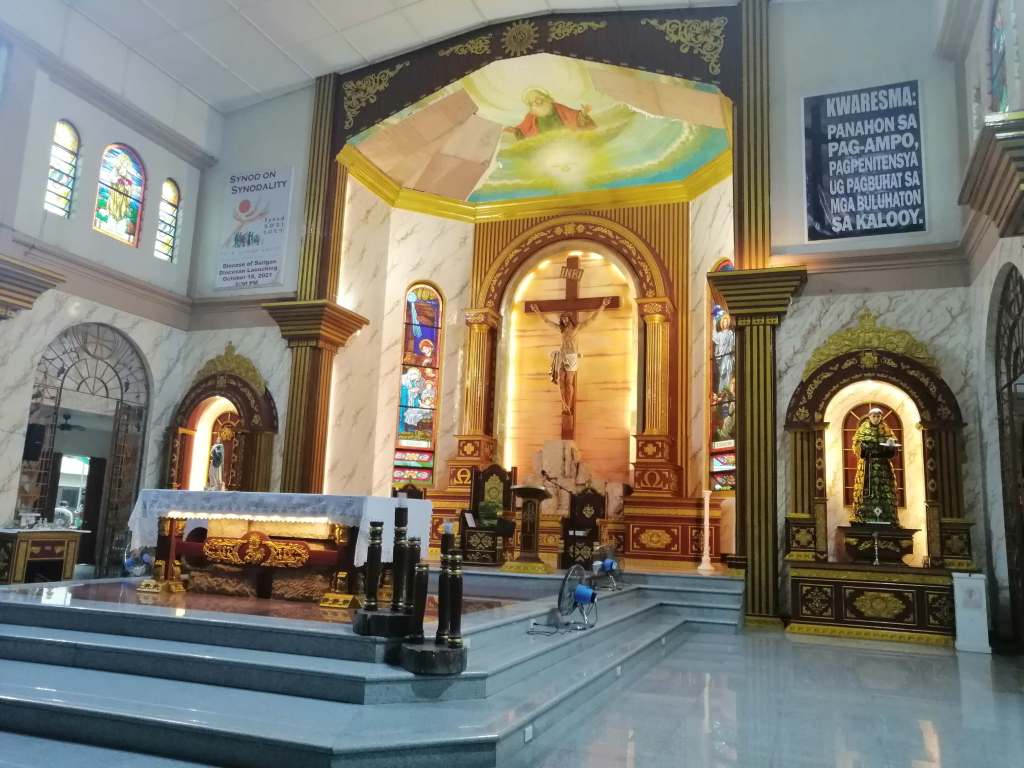
Surigao Cathedral (Filipino: Katedral ng Surigao), formally known as the Saint Nicholas of Tolentino Cathedral Parish (Filipino: Parokyang Katedral ni San Nicolas de Tolentino), is a Roman Catholic cathedral located at Surigao City in the Philippines. It is the seat of the Roman Catholic Diocese of Surigao.
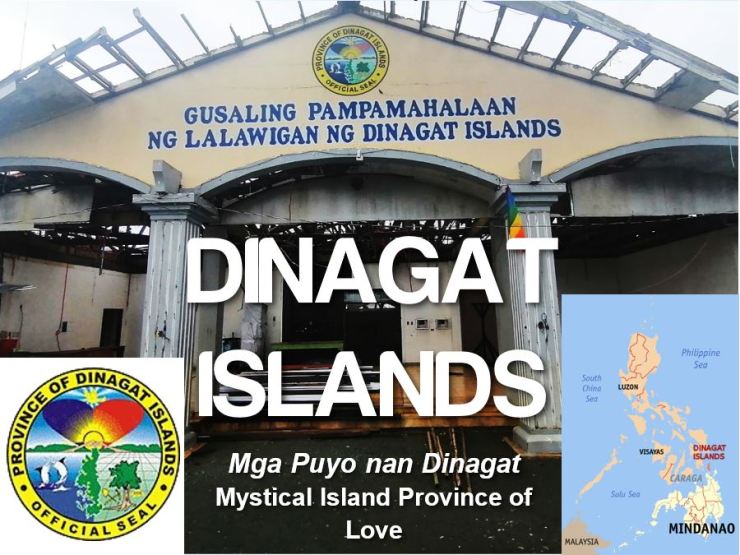
Dinagat Islands (Cebuano: Mga Pulo sa Dinagat; Surigaonon: Mga Puyo nan Dinagat; Kabalian: Mga Puyo san Dinagat; Waray: Mga Purô han Dinagat; Filipino: Mga Islang Dinagat), officially the Province of Dinagat Islands, is an island province in the Caraga region of the Philippines, located on the south side of Leyte Gulf. The island of Leyte is to its west, across Surigao Strait, and Mindanao is to its south. Its main island, Dinagat, is about 60 kilometres (37 mi) from north to south. The name of the island means “of the sea” or “like the sea”, an affixed from of the root word dagat(“sea“) in the Visayan languages.
San Jose, officially the Municipality of San Jose (Surigaonon: Lungsod nan San Jose; Cebuano: Lungsod sa San Jose; Tagalog: Bayan ng San Jose), is a 4th class municipality and capital of the province of Dinagat Islands, Philippines. San Jose is the seat of the Philippine Benevolent Missionaries Association (PBMA). The Municipality of San Jose was named in honor of Jose Ecleo who was its pioneer and the father of the late renowned mayor of the Municipality of Dinagat.
Divine Master’s Shrine is located at Aurelio, San Jose, Dinagat Islands. The shrine was built for Ruben Edera Ecleo Sr. the founder of the Philippine Benevolent Missionaries Association Inc. From here, you can see the beautiful bay, surrounding islands and downtown as well as nearby Islander’s Castle on top of the hill. Tourists are welcome.
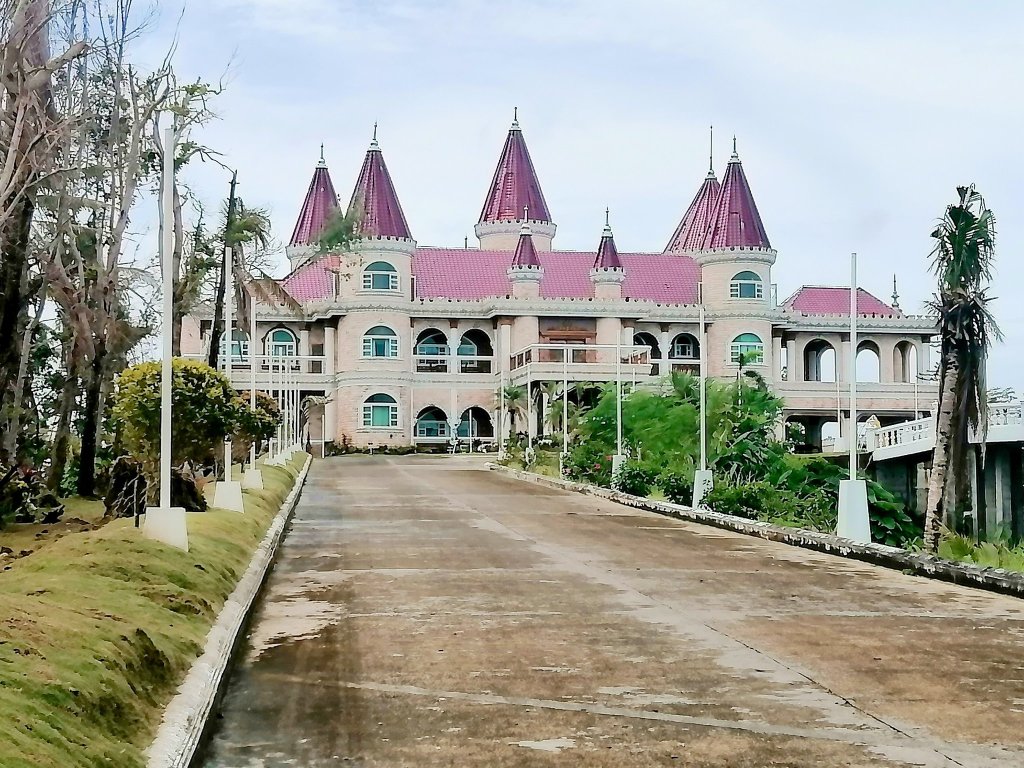
Islander’s Castle is a residence of Governor Glenda Ecleo, of Dinagat Islands. Although not open to the public, the home can be viewed from the gates. The building, also known as the “White Castle”, was erected by Glenda Ecleo, widow of Ruben Ecleo, in 2007. I was able to take a picture outside before the tourists left the castle gates.










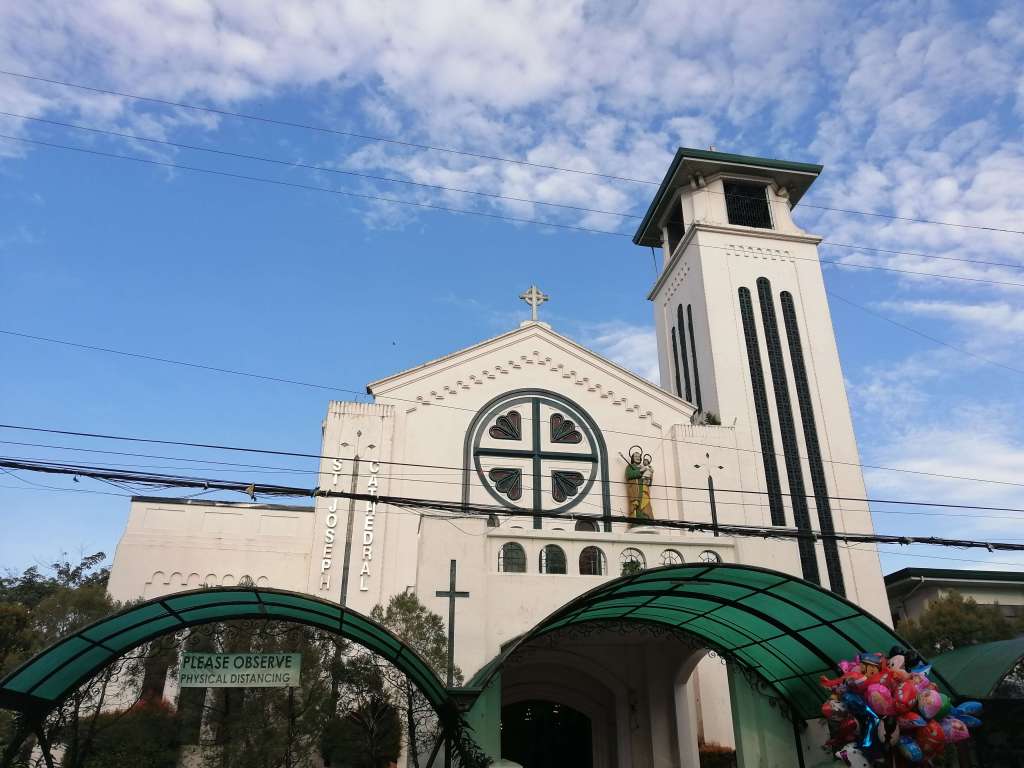

 I bought this just in front of Butuan Cathedral where vendors flock every Sunday morning.













 Ben Goes Where